


Bathrobe|HS Code
Bathrobe belong to HS heading 6207, but the exact 6-digit code depends on your product specifications. Let our AI tool analyze your product details and provide the precise HS code and tariff information.
Bathrobe HS Codes
Nightshirts and pajamas Of man-made fibers (651)
Underpants and briefs Of other textile materials
Nightshirts and pajamas Of cotton
Other than Underpants and briefs and Nightshirts and pajamas Of cotton
Nightshirts and pajamas Of other textile materials
Underpants and briefs Of cotton (352)
Other than Underpants and briefs and Nightshirts and pajamas Of other textile materials

DeepBeez

Founded in 2025
Tariff Tracker
Bathrobe
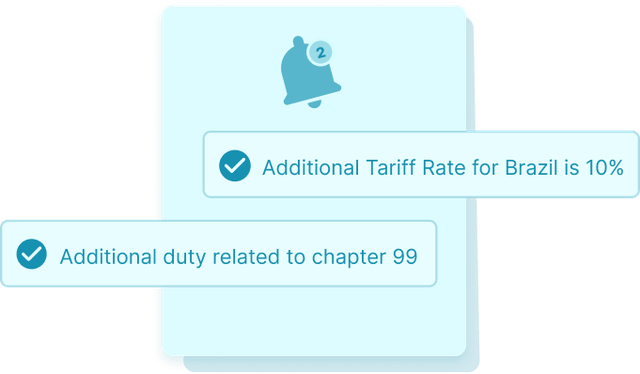
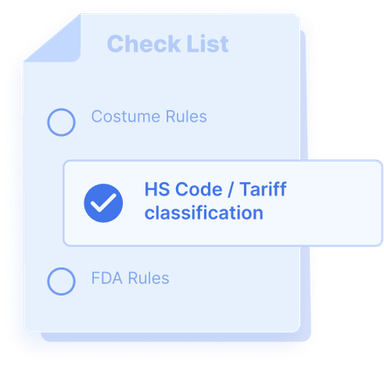
Import Requirements
Bathrobe
Import Data
Bathrobe


AI Insight
Plastic Bucket under HS Code 3924-24 shows growing demand in 12 emerging markets with favorable duty rates and limited competition. Our AI has identified key compliance requirements, optimal sourcing regions, and upcoming tariff changes that could impact your margins. See the complete analysis to discover specific opportunities.










Market
Opportunities
Top 5 Partners by Quantity
 United States
 Australia
 India
India Canada


Bathrobe HS Code description
Bathrobe harmonized system code
Product Overview The product under consideration is a Bathrobe, classified under the HS Code 6207. A Bathrobe is a loose-fitting outer garment, typically made from absorbent materials such as cotton, polyester, or microfiber, designed to be worn over sleepwear or after bathing. The key characteristics of a Bathrobe are its soft texture, absorbency, durability, and comfort. Depending on the design, it may feature a waist tie, a shawl collar, and pockets. The bathrobes under HS Code 6207 can be subcategorized based on gender (men's or women's), material, size, and design. Commercially, bathrobes are commonly used in hotels, spas, and retail establishments for consumer purchase, offering a sense of luxury and comfort to the end-users. The market positioning of bathrobes lies in their value proposition of comfort and practicality, providing a competitive advantage in the apparel sector, particularly in loungewear and sleepwear categories. HS Code Classification & Trade Specifications The Bathrobe falls under the full 6-digit HS Code of 6207.11.00, where 62 represents the chapter for ‘Articles of apparel and clothing accessories, not knitted or crocheted,' 07 is the heading for 'Men’s or boys’ singlets and other vests, underpants, briefs, nightshirts, pyjamas, bathrobes, dressing gowns and similar articles,' and 11.00 is the subheading for 'Bathrobes, dressing gowns and similar articles.' The rationale behind this classification is the product's design as a type of clothing accessory commonly used for after-bath or lounging purposes. In terms of trade considerations, bathrobes are typically packaged in individual plastic wraps to ensure cleanliness and preservation during shipping. Shipping requirements may vary based on the destination country’s regulations. Quality standards for bathrobes under this HS code are set high, with the products expected to be of resilient, absorbent material, ensuring durability and comfort. The description and classification of this product comply with WTO and customs documentation standards, facilitating smooth international trade operations.
Bathrobe Chapter Note
1.- This Chapter applies only to made up articles of any textile fabric other than wadding, excluding knitted or crocheted articles (other than those of heading 62.12). 2.- This Chapter does not cover : (a) Worn clothing or other worn articles of heading 63.09; or (b) Orthopaedic appliances, surgical belts, trusses or the like (heading 90.21). 3.- For the purposes of headings 62.03 and 62.04 : (a) The term “suit” means a set of garments composed of two or three pieces made up, in respect of their outer surface, in identical fabric and comprising : - one suit coat or jacket the outer shell of which, exclusive of sleeves, consists of four or more panels, designed to cover the upper part of the body, possibly with a tailored waistcoat in addition whose front is made from the same fabric as the outer surface of the other components of the set and whose back is made from the same fabric as the lining of the suit coat or jacket; and - one garment designed to cover the lower part of the body and consisting of trousers, breeches or shorts (other than swimwear), a skirt or a divided skirt, having neither braces nor bibs. All of the components of a “suit” must be of the same fabric construction, colour and composition; they must also be of the same style and of corresponding or compatible size. However, these components may have piping (a strip of fabric sewn into the seam) in a different fabric. If several separate components to cover the lower part of the body are presented together (for example, two pairs of trousers or trousers and shorts, or a skirt or divided skirt and trousers), the constituent lower part shall be one pair of trousers or, in the case of women's or girls' suits, the skirt or divided skirt, the other garments being considered separately. The term “suit” includes the following sets of garments, whether or not they fulfil all the above conditions : - morning dress, comprising a plain jacket (cutaway) with rounded tails hanging well down at the back and striped trousers; - evening dress (tailcoat), generally made of black fabric, the jacket of which is relatively short at the front, does not close and has narrow skirts cut in at the hips and hanging down behind; - dinner jacket suits, in which the jacket is similar in style to an ordinary jacket (though perhaps revealing more of the shirt front), but has shiny silk or imitation silk lapels. (b) The term “ensemble” means a set of garments (other than suits and articles of heading 62.07 or 62.08) composed of several pieces made up in identical fabric, put up for retail sale, and comprising : - one garment designed to cover the upper part of the body, with the exception of waistcoats which may also form a second upper garment, and - one or two different garments, designed to cover the lower part of the body and consisting of trousers, bib and brace overalls, breeches, shorts (other than swimwear), a skirt or a divided skirt. All of the components of an ensemble must be of the same fabric construction, style, colour and composition; they also must be of corresponding or compatible size. The term “ensemble” does not apply to track suits or ski suits, of heading 62.11.4.- Headings 62.05 and 62.06 do not cover garments with pockets below the waist, with a ribbed waistband or other means of tightening at the bottom of the garment. Heading 62.05 does not cover sleeveless garments. “Shirts” and “shirt-blouses” are garments designed to cover the upper part of the body, having long or short sleeves and a full or partial opening starting at the neckline. “Blouses” are loose-fitting garments also designed to cover the upper part of the body but may be sleeveless and with or without an opening at the neckline. “Shirts”, “shirt-blouses” and “blouses” may also have a collar. 5.- For the purposes of heading 62.09 : (a) The expression “babies' garments and clothing accessories” means articles for young children of a body height not exceeding 86 cm; (b) Articles which are, prima facie, classifiable both in heading 62.09 and in other headings of this Chapter are to be classified in heading 62.09. 6.- Garments which are, prima facie, classifiable both in heading 62.10 and in other headings of this Chapter, excluding heading 62.09, are to be classified in heading 62.10. 7.- For the purposes of heading 62.11, “ski suits” means garments or sets of garments which, by their general appearance and texture, are identifiable as intended to be worn principally for skiing (crosscountry or alpine). They consist either of : (a) a “ski overall”, that is, a one-piece garment designed to cover the upper and the lower parts of the body; in addition to sleeves and a collar the ski overall may have pockets or footstraps; or (b) a “ski ensemble”, that is, a set of garments composed of two or three pieces, put up for retail sale and comprising : - one garment such as an anorak, wind-cheater, wind-jacket or similar article, closed by a slide fastener (zipper), possibly with a waistcoat in addition, and - one pair of trousers whether or not extending above waist-level, one pair of breeches or one bib and brace overall. The “ski ensemble” may also consist of an overall similar to the one mentioned in paragraph (a) above and a type of padded, sleeveless jacket worn over the overall. All the components of a “ski ensemble” must be made up in a fabric of the same texture, style and composition whether or not of the same colour; they also must be of corresponding or compatible size. 8.- Scarves and articles of the scarf type, square or approximately square, of which no side exceeds 60 cm, are to be classified as handkerchiefs (heading 62.13). Handkerchiefs of which any side exceeds 60 cm are to be classified in heading 62.14. 9.- Garments of this Chapter designed for left over right closure at the front shall be regarded as men's or boys' garments, and those designed for right over left closure at the front as women's or girls' garments. These provisions do not apply where the cut of the garment clearly indicates that it is designed for one or other of the sexes. Garments which cannot be identified as either men's or boys' garments or as women's or girls' garments are to be classified in the headings covering women's or girls' garments. 10.- Articles of this Chapter may be made of metal thread.