


Brake lining|HS Code
Brake Lining belong to HS heading 6813, but the exact 6-digit code depends on your product specifications. Let our AI tool analyze your product details and provide the precise HS code and tariff information.
Brake Lining HS Codes
Containing asbestos
Not containing asbestos Brake linings and pads
Not containing asbestos Other than Brake linings and pads

DeepBeez

Founded in 2025
Tariff Tracker
Brake lining
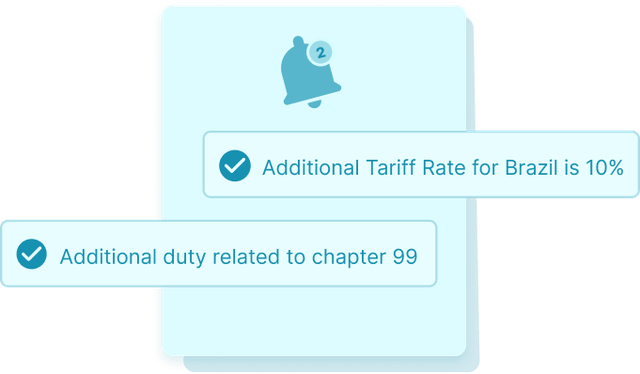
Import Requirements
Brake lining
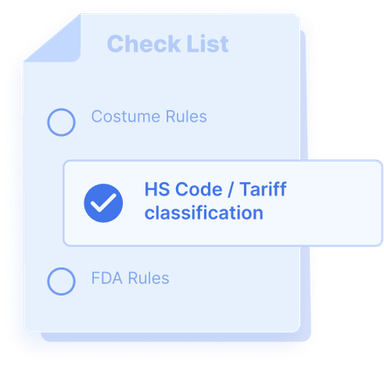
Import Data
Brake lining


AI Insight
Plastic Bucket under HS Code 3924-24 shows growing demand in 12 emerging markets with favorable duty rates and limited competition. Our AI has identified key compliance requirements, optimal sourcing regions, and upcoming tariff changes that could impact your margins. See the complete analysis to discover specific opportunities.










Market
Opportunities
Top 5 Partners by Quantity
 United States
 Australia
 India
India Canada


Brake lining HS Code description
Brake lining harmonized system code
Product Overview Brake Lining, classified under HS Code 6813, refers to the friction material that is primarily composed of asbestos, copper wire, friction dust, and adhesive. Its key characteristics are its high tensile strength, excellent friction, temperature stability, non-noise, and non-pollution. It's designed to be long-lasting, displaying less wear and tear compared to other friction materials, and is thus, more cost-effective. Within the HS Code 6813, Brake Lining falls under the subcategory of 'Friction material and articles thereof'. The product is widely used in the automotive industry, specifically in vehicles' brake systems to reduce speed or hold them stationary. Its market positioning is primarily attributed to its superior quality and durability, making it a critical component in vehicle safety. HS Code Classification & Trade Specifications The HS Code for Brake Lining is 6813.80. This 6-digit code is broken down hierarchically into Chapter 68 (Articles of Stone, Plaster, Cement, Asbestos, Mica or similar materials), Heading 13 (Friction material and articles thereof, not mounted; for brakes, for clutches or the like, with a basis of asbestos, of other mineral substances or of cellulose), and Subheading 80 (Brake linings and pads). The product is classified under this code due to its composition and primary use in brake systems. For trade, Brake Lining is commonly packaged in cartons and stored in dry, cool environments to maintain its quality. It is essential to note that the Brake Lining complies with international standards such as ISO 9001, ensuring its quality and reliability. Shipping requirements generally stipulate that the product should be handled with care to avoid any damage. In accordance with WTO and customs documentation standards, all necessary trade documentation needs to be provided, including certificates of origin and quality compliance certificates.
Brake lining Chapter Note
1.- This Chapter does not cover : (a) Goods of Chapter 25; (b) Coated, impregnated or covered paper and paperboard of heading 48.10 or 48.11 (for example, paper and paperboard coated with mica powder or graphite, bituminised or asphalted paper and paperboard); (c) Coated, impregnated or covered textile fabric of Chapter 56 or 59 (for example, fabric coated or covered with mica powder, bituminised or asphalted fabric); (d) Articles of Chapter 71; (e) Tools or parts of tools, of Chapter 82; (f) Lithographic stones of heading 84.42; (g) Electrical insulators (heading 85.46) or fittings of insulating material of heading 85.47; (h) Dental burrs (heading 90.18); (ij) Articles of Chapter 91 (for example, clocks and clock cases); (k) Articles of Chapter 94 (for example, furniture, luminaires and lighting fittings, prefabricated buildings); (l) Articles of Chapter 95 (for example, toys, games and sports requisites); (m) Articles of heading 96.02, if made of materials specified in Note 2 (b) to Chapter 96, or of heading 96.06 (for example, buttons), of heading 96.09 (for example, slate pencils), heading 96.10 (for example, drawing slates) or of heading 96.20 (monopods, bipods, tripods and similar articles); or (n) Articles of Chapter 97 (for example, works of art). 2.- In heading 68.02 the expression “worked monumental or building stone” applies not only to the varieties of stone referred to in heading 25.15 or 25.16 but also to all other natural stone (for example, quartzite, flint, dolomite and steatite) similarly worked; it does not, however, apply to slate.