

Ceramic tiles - floor tiles|HS Code
Ceramic Tiles - Floor Tiles belong to HS heading 6907, but the exact 6-digit code depends on your product specifications. Let our AI tool analyze your product details and provide the precise HS code and tariff information.
Ceramic Tiles - Floor Tiles HS Codes
Flags and paving, hearth or wall tiles, other than those of subheading 6907.30 and 6907.40 Of a water absorption coefficient by weight not exceeding 0.5%
Flags and paving, hearth or wall tiles, other than those of subheading 6907.30 and 6907.40 Of water absorption coefficient by weight exceeding 0.5 percent but not exceeding 10 percent
Mosaic cubes and the like, other than those of subheading 6907.40
Flags and paving, hearth or wall tiles, other than those of subheading 6907.30 and 6907.40 Of a water absorption coefficient by weight exceeding 10 percent
Finishing ceramics

DeepBeez

Founded in 2025
Tariff Tracker
Ceramic tiles - floor tiles
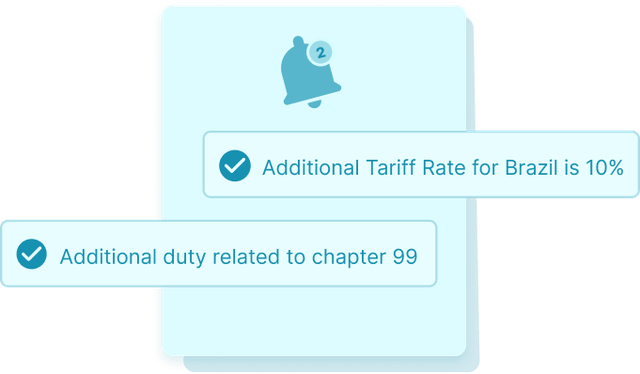
Import Requirements
Ceramic tiles - floor tiles

Import Data
Ceramic tiles - floor tiles


AI Insight
Plastic Bucket under HS Code 3924-24 shows growing demand in 12 emerging markets with favorable duty rates and limited competition. Our AI has identified key compliance requirements, optimal sourcing regions, and upcoming tariff changes that could impact your margins. See the complete analysis to discover specific opportunities.









Market
Opportunities
Top 5 Partners by Quantity
 United States
 Australia
 India
India Canada


Ceramic tiles - floor tiles HS Code description
Ceramic tiles - floor tiles harmonized system code
Product Overview Ceramic Tiles - Floor Tiles, classified under HS Code 6907, are a type of building material renowned for their durability, ease of maintenance, and aesthetic versatility. These tiles are manufactured using a process that includes shaping, drying, glazing, and firing clay or other ceramic materials. The key characteristics of these tiles include their hardness, resistance to wear, water absorption capacity of less than 0.5%, and varied dimensions, typically ranging from 1x1 to 24x24 inches. Within the HS Code 6907, ceramic floor tiles are further classified based on their water absorption rate, surface finish (glazed or unglazed), and production method (extruded or dust-pressed). Their commercial applications are extensive, spanning across residential, commercial, and industrial sectors, including food service, retail, and processing industries. Ceramic floor tiles have carved a niche in the market due to their long-lasting characteristics, adaptable design options, and cost-effectiveness. HS Code Classification & Trade Specifications The complete HS Code for Ceramic Tiles - Floor Tiles is 6907. This hierarchical classification comprises Chapter 69 (Ceramic Products), Heading 07 (Unglazed Ceramic Flags and Paving, Hearth or Wall Tiles; Unglazed Ceramic Mosaic Cubes and the Like). This product falls under this specific code due to its ceramic composition and its primary use for flooring. Trade considerations for this product include packaging in cartons or crates for protection, preservation by ensuring dry storage conditions, and shipping requirements that consider weight and fragility. The quality standards for Ceramic Tiles - Floor Tiles under HS Code 6907 are primarily defined by ISO 13006, which provides specifications for dimensions, surface quality, and physical properties, among others. Compliance with these standards, as well as the customs documentation standards set by the World Trade Organization (WTO), is crucial for successful international trade of these products.
Ceramic tiles - floor tiles Chapter Note
1.- This Chapter applies only to ceramic products which have been fired after shaping : (a) Headings 69.04 to 69.14 apply only to such products other than those classifiable in headings 69.01 to 69.03; (b) Articles heated to temperatures less than 800 °C for purposes such as curing of resins, accelerating hydration reactions, or for the removal of water or other volatile components, are not considered to be fired. Such articles are excluded from Chapter 69; and (c) Ceramic articles are obtained by firing inorganic, non-metallic materials which have been prepared and shaped previously at, in general, room temperature. Raw materials comprise, inter alia, clays, siliceous materials including fused silica, materials with a high melting point, such as oxides, carbides, nitrides, graphite or other carbon, and in some cases binders such as refractory clays or phosphates. 2.- This Chapter does not cover : (a) Products of heading 28.44; (b) Articles of heading 68.04; (c) Articles of Chapter 71 (for example, imitation jewellery); (d) Cermets of heading 81.13; (e) Articles of Chapter 82; (f) Electrical insulators (heading 85.46) or fittings of insulating material of heading 85.47; (g) Artificial teeth (heading 90.21); (h) Articles of Chapter 91 (for example, clocks and clock cases); (ij) Articles of Chapter 94 (for example, furniture, luminaires and lighting fittings, prefabricated buildings); (k) Articles of Chapter 95 (for example, toys, games and sports requisites); (l) Articles of heading 96.06 (for example, buttons) or of heading 96.14 (for example, smoking pipes); or (m) Articles of Chapter 97 (for example, works of art).