


Cotton sweatshirt Hs Code
HS Code: 6110.20
cotton sweatshirt classified under HS code 6110.20
Chapter
61Apparel and clothing accessories , Knitted or crocheted
Heading
6110Sweaters, pullovers, sweatshirts, waistcoats (vests) and similar articles, knitted or crocheted
Sub Heading
6110.20Of cotton

DeepBeez

Founded in 2025
Tariff Tracker
Cotton sweatshirt
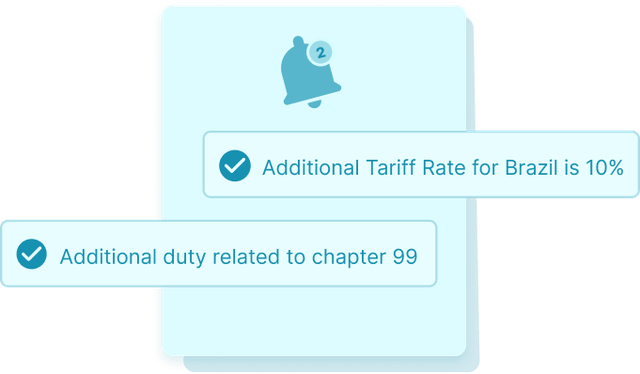
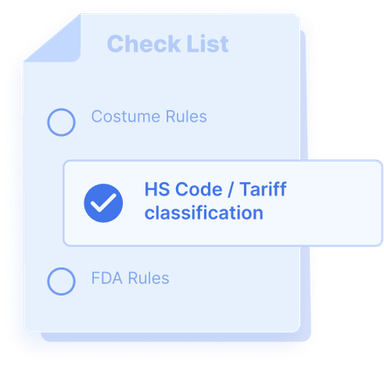
Import Requirements
Cotton sweatshirt
Import Data
Cotton sweatshirt


AI Insight
Plastic Bucket under HS Code 3924-24 shows growing demand in 12 emerging markets with favorable duty rates and limited competition. Our AI has identified key compliance requirements, optimal sourcing regions, and upcoming tariff changes that could impact your margins. See the complete analysis to discover specific opportunities.










Market
Opportunities
Top 5 Partners by Quantity
 United States
 Australia
 India
India Canada


Cotton sweatshirt HS Code description
Cotton sweatshirt harmonized system code
Product Overview Cotton sweatshirts classified under HS Code 611020 are textile garments primarily composed of knitted cotton fabric designed for upper body wear, typically featuring long sleeves and ribbed cuffs and hems. These sweatshirts exhibit medium to heavy fabric weight, generally ranging from 250 to 400 grams per square meter (gsm), ensuring durability and thermal comfort. The manufacturing process involves ring-spun cotton yarns with single or double knitting techniques, often incorporating finishing treatments such as enzyme washes or compacting to enhance fabric stability and softness. Under HS Code 611020, the product encompasses subcategories including crew neck, hooded, and zip-front sweatshirts, differentiated by construction and design elements. Commercially, these cotton sweatshirts serve multiple sectors including retail apparel distribution, corporate uniform supply, and promotional merchandise, with additional applications in food service and processing industries where comfort and hygiene standards are prioritized. The product’s value proposition lies in its natural fiber content, breathability, and compliance with international textile standards, positioning it competitively in both developed and emerging markets for import/export transactions. HS Code Classification & Trade Specifications The HS Code 611020 falls under Chapter 61 (Articles of Apparel and Clothing Accessories, Knitted or Crocheted), Heading 61.10 (Sweaters, Pullovers, Sweatshirts, Waistcoats and Similar Articles, Knitted or Crocheted), and specifically Subheading 611020 covers sweatshirts of cotton fabric. This classification is justified by the product’s knitted construction and predominant cotton fiber content, distinguishing it from sweatshirts made of synthetic or blended fibers categorized under different subheadings. Standard trade practices for these garments include packaging in polybags or cartons with humidity control measures to prevent mold and fabric degradation during transit. Preservation typically involves ambient temperature conditions with moisture barriers to maintain product integrity. Shipping requirements emphasize compliance with WTO agreements and customs documentation norms, including accurate fiber content declarations and country of origin labeling. Quality standards align with ISO 9001 and OEKO-TEX® certifications, ensuring conformity to international safety and environmental regulations. Detailed product specifications such as fabric weight, stitch density, and dimensional tolerances are critical for customs clearance and tariff classification accuracy in global trade operations.
Cotton sweatshirt Chapter Note
1.- This Chapter applies only to made up knitted or crocheted articles. 2.- This Chapter does not cover : (a) Goods of heading 62.12; (b) Worn clothing or other worn articles of heading 63.09; or (c) Orthopaedic appliances, surgical belts, trusses or the like (heading 90.21). 3.- For the purposes of headings 61.03 and 61.04 : (a) The term “suit” means a set of garments composed of two or three pieces made up, in respect of their outer surface, in identical fabric and comprising : - one suit coat or jacket the outer shell of which, exclusive of sleeves, consists of four or more panels, designed to cover the upper part of the body, possibly with a tailored waistcoat in addition whose front is made from the same fabric as the outer surface of the other components of the set and whose back is made from the same fabric as the lining of the suit coat or jacket; and - one garment designed to cover the lower part of the body and consisting of trousers, breeches or shorts (other than swimwear), a skirt or a divided skirt, having neither braces nor bibs. All of the components of a “suit” must be of the same fabric construction, colour and composition; they must also be of the same style and of corresponding or compatible size. However, these components may have piping (a strip of fabric sewn into the seam) in a different fabric. If several separate components to cover the lower part of the body are presented together (for example, two pairs of trousers or trousers and shorts, or a skirt or divided skirt and trousers), the constituent lower part shall be one pair of trousers or, in the case of women's or girls' suits, the skirt or divided skirt, the other garments being considered separately. The term “suit” includes the following sets of garments, whether or not they fulfil all the above conditions : - morning dress, comprising a plain jacket (cutaway) with rounded tails hanging well down at the back and striped trousers; - evening dress (tailcoat), generally made of black fabric, the jacket of which is relatively short at the front, does not close and has narrow skirts cut in at the hips and hanging down behind; - dinner jacket suits, in which the jacket is similar in style to an ordinary jacket (though perhaps revealing more of the shirt front), but has shiny silk or imitation silk lapels. (b) The term “ensemble” means a set of garments (other than suits and articles of heading 61.07, 61.08 or 61.09), composed of several pieces made up in identical fabric, put up for retail sale, and comprising : - one garment designed to cover the upper part of the body, with the exception of pullovers which may form a second upper garment in the sole context of twin sets, and of waistcoats which may also form a second upper garment, and - one or two different garments, designed to cover the lower part of the body and consisting of trousers, bib and brace overalls, breeches, shorts (other than swimwear), a skirt or a divided skirt. All of the components of an ensemble must be of the same fabric construction, style, colour and composition; they also must be of corresponding or compatible size. The term “ensemble” does not apply to track suits or ski suits, of heading 61.12.4.- Headings 61.05 and 61.06 do not cover garments with pockets below the waist, with a ribbed waistband or other means of tightening at the bottom of the garment, or garments having an average of less than 10 stitches per linear centimetre in each direction counted on an area measuring at least 10 cm x 10 cm. Heading 61.05 does not cover sleeveless garments. “Shirts” and “shirt-blouses” are garments designed to cover the upper part of the body, having long or short sleeves and a full or partial opening starting at the neckline. “Blouses” are loose-fitting garments also designed to cover the upper part of the body but may be sleeveless and with or without an opening at the neckline. “Shirts”, “shirt-blouses” and “blouses” may also have a collar. 5.- Heading 61.09 does not cover garments with a drawstring, ribbed waistband or other means of tightening at the bottom of the garment. 6.- For the purposes of heading 61.11 : (a) The expression “babies' garments and clothing accessories” means articles for young children of a body height not exceeding 86 cm; (b) Articles which are, prima facie, classifiable both in heading 61.11 and in other headings of this Chapter are to be classified in heading 61.11. 7.- For the purposes of heading 61.12, “ski suits” means garments or sets of garments which, by their general appearance and texture, are identifiable as intended to be worn principally for skiing (crosscountry or alpine). They consist either of : (a) a “ski overall”, that is, a one-piece garment designed to cover the upper and the lower parts of the body; in addition to sleeves and a collar the ski overall may have pockets or footstraps; or (b) a “ski ensemble”, that is, a set of garments composed of two or three pieces, put up for retail sale and comprising : - one garment such as an anorak, wind-cheater, wind-jacket or similar article, closed by a slide fastener (zipper), possibly with a waistcoat in addition, and - one pair of trousers whether or not extending above waist-level, one pair of breeches or one bib and brace overall. The “ski ensemble” may also consist of an overall similar to the one mentioned in paragraph (a) above and a type of padded, sleeveless jacket worn over the overall. All the components of a “ski ensemble” must be made up in a fabric of the same texture, style and composition whether or not of the same colour; they also must be of corresponding or compatible size. 8.- Garments which are, prima facie, classifiable both in heading 61.13 and in other headings of this Chapter, excluding heading 61.11, are to be classified in heading 61.13. 9.- Garments of this Chapter designed for left over right closure at the front shall be regarded as men's or boys' garments, and those designed for right over left closure at the front as women's or girls' garments. These provisions do not apply where the cut of the garment clearly indicates that it is designed for one or other of the sexes. Garments which cannot be identified as either men's or boys' garments or as women's or girls' garments are to be classified in the headings covering women's or girls' garments. 10.-Articles of this Chapter may be made of metal thread.