


Cow leather|HS Code
Cow Leather belong to HS heading 4107, but the exact 6-digit code depends on your product specifications. Let our AI tool analyze your product details and provide the precise HS code and tariff information.
Cow Leather HS Codes
Whole hides and skins Other than Full grains, unsplit and Grain splits
Other, including sides Other than Full grains, unsplit and Grain splits
Whole hides and skins Grain splits
Whole hides and skins Full grains, unsplit
Other, including sides Grain splits
Other, including sides Full grains, unsplit

DeepBeez

Founded in 2025
Tariff Tracker
Cow leather
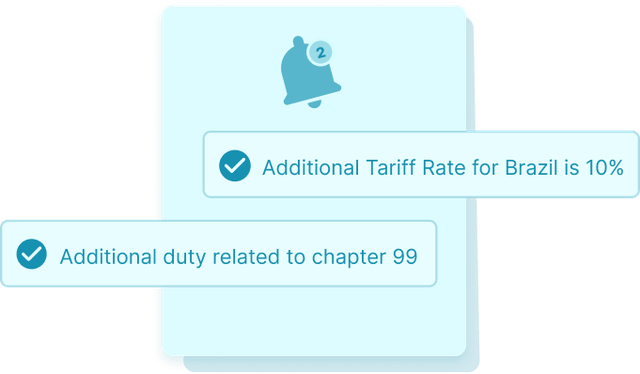
Import Requirements
Cow leather
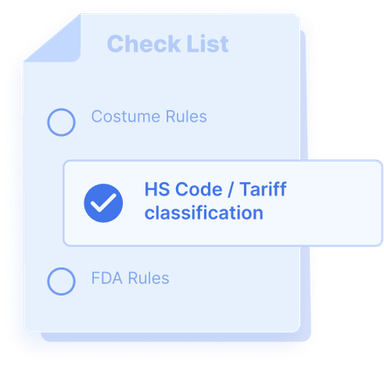
Import Data
Cow leather


AI Insight
Plastic Bucket under HS Code 3924-24 shows growing demand in 12 emerging markets with favorable duty rates and limited competition. Our AI has identified key compliance requirements, optimal sourcing regions, and upcoming tariff changes that could impact your margins. See the complete analysis to discover specific opportunities.










Market
Opportunities
Top 5 Partners by Quantity
 United States
 Australia
 India
India Canada


Cow leather HS Code description
Cow leather harmonized system code
Product Overview The product under discussion is Cow Leather classified under the Harmonized System (HS) Code 4107. Cow Leather, as defined by this HS code, refers to leather derived from bovine or equine animals, without hair on, irrespective of whether it has been split or not. Key characteristics of this product include its physical attributes such as thickness, smoothness, and durability, and its processing status, which can range from raw to fully tanned. Within HS Code 4107, subcategories differentiate between full grain, top grain, and split leather, each having varying levels of quality and durability. Commercially, Cow Leather finds extensive applications in sectors such as footwear, clothing, furniture, and automobile industries, owing to its long-lasting and versatile nature. In terms of market positioning, Cow Leather offers a high-value proposition due to its superior quality, durability, and aesthetic appeal, giving it a competitive edge over synthetic alternatives. HS Code Classification & Trade Specifications HS Code 4107 falls under Chapter 41 (Raw hides and skins, leather, furskins, and articles thereof), Heading 07 (Leather of other animals, without hair on, whether or not split), and specifically under subheading 4107 (Leather of bovine or equine animals, without hair on, whether or not split). The rationale behind this classification lies in the product's origin and processing state, distinguishing it from other types of leather. Trade considerations for Cow Leather include packaging in rolls or stacks, preservation methods involving controlled temperature and humidity conditions, and shipping requirements that necessitate protection from moisture and physical damage. The quality standards for Cow Leather are defined by metrics such as thickness, color uniformity, surface defects, and chemical composition. These standards align with international trade guidelines and customs documentation requirements, ensuring consistency and transparency in global transactions. The use of precise technical terminology ensures the product description is accurate, factual, and easily comprehensible to trade professionals.
Cow leather Chapter Note
1.- This Chapter does not cover : (a) Parings or similar waste, of raw hides or skins (heading 05.11); (b) Birdskins or parts of birdskins, with their feathers or down, of heading 05.05 or 67.01; or (c) Hides or skins, with the hair or wool on, raw, tanned or dressed (Chapter 43); the following are, however, to be classified in Chapter 41, namely, raw hides and skins with the hair or wool on, of bovine animals (including buffalo), of equine animals, of sheep or lambs (except Astrakhan, Broadtail, Caracul, Persian or similar lambs, Indian, Chinese, Mongolian or Tibetan lambs), of goats or kids (except Yemen, Mongolian or Tibetan goats and kids), of swine (including peccary), of chamois, of gazelle, of camels (including dromedaries), of reindeer, of elk, of deer, of roebucks or of dogs. 2.- (A) Headings 41.04 to 41.06 do not cover hides and skins which have undergone a tanning (including pre-tanning) process which is reversible (headings 41.01 to 41.03, as the case may be). (B) For the purposes of headings 41.04 to 41.06, the term “crust” includes hides and skins that have been retanned, coloured or fat-liquored (stuffed) prior to drying. 3.- Throughout the Nomenclature the expression “composition leather” means only substances of the kind referred to in heading 41.15.