


Halva Hs Code
HS Code: 1704.90
halva classified under HS code 1704.90
Chapter
17Sugars and sugar confectionery
Heading
1704Sugar confectionery (including white chocolate), not containing cocoa
Sub Heading
1704.90Other than chewing gum, whether or not sugar-coated

DeepBeez

Founded in 2025
Tariff Tracker
Halva
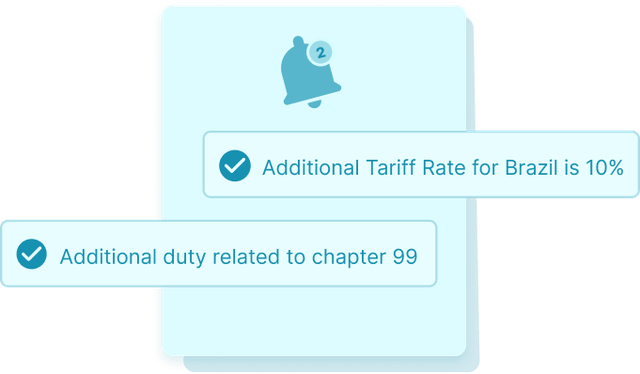
Import Requirements
Halva
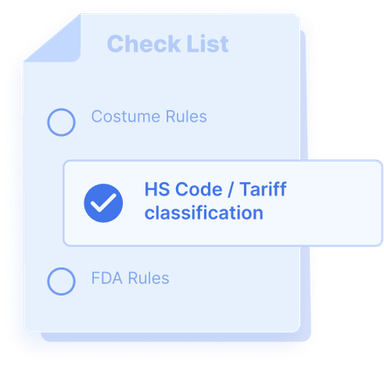
Import Data
Halva


AI Insight
Plastic Bucket under HS Code 3924-24 shows growing demand in 12 emerging markets with favorable duty rates and limited competition. Our AI has identified key compliance requirements, optimal sourcing regions, and upcoming tariff changes that could impact your margins. See the complete analysis to discover specific opportunities.










Market
Opportunities
Top 5 Partners by Quantity
 United States
 Australia
 India
India Canada


Halva HS Code description
Halva harmonized system code
Product Overview Halva, classified under HS Code 170490, is a traditional confectionery product primarily composed of sugar and various vegetable fats or oils, frequently incorporating sesame seeds or other nut pastes. This product is characterized by its dense, crumbly texture and granular composition, achieved through controlled cooking and mixing processes that ensure uniform crystallization and moisture content typically below 3%. Halva under this classification is processed to meet food safety and quality standards, exhibiting a consistent color range from pale beige to light brown, and a moisture content that supports preservation without refrigeration. The HS Code 170490 encompasses several subcategories, including sesame-based halva, sunflower seed halva, and other nut or seed variations, each differentiated by their primary fat source and ingredient composition. Commercially, halva serves diverse applications across food service, retail confectionery, and ingredient use in bakery and dessert production. Its value proposition lies in its shelf stability, cultural significance, and versatility as both a standalone product and a food ingredient, positioning it competitively within international markets for confectionery imports and specialty food products. HS Code Classification & Trade Specifications The complete HS Code for halva is 1704.90, situated within Chapter 17, which covers “Sugars and sugar confectionery.” Heading 1704 pertains to “Sugar confectionery (including white chocolate), not containing cocoa,” with subheading 1704.90 specifying “Other sugar confectionery not containing cocoa.” Halva is classified here due to its formulation primarily from sugar and vegetable fats without cocoa content, consistent with the Harmonized System’s scope and definitions. Trade considerations include packaging in moisture-resistant materials such as laminated foil or polyethylene to preserve product integrity during transit, with typical net weights ranging from 250 grams to 5 kilograms per unit. Preservation methods focus on maintaining low water activity and protection from contamination and oxidation, often through vacuum sealing or modified atmosphere packaging. Shipping conditions require temperature-controlled environments to prevent fat separation or spoilage in tropical climates. Quality standards adhere to Codex Alimentarius guidelines and international food safety certifications, ensuring compliance with WTO agreements and facilitating customs clearance. The description’s alignment with HS nomenclature aids customs brokers and trade compliance officers in accurate tariff classification and duty assessment.
Halva Chapter Note
1.- This Chapter does not cover : (a) Sugar confectionery containing cocoa (heading 18.06); (b) Chemically pure sugars (other than sucrose, lactose, maltose, glucose and fructose) or other products of heading 29.40; or (c) Medicaments or other products of Chapter 30. Subheading Notes. 1.- For the purposes of subheadings 1701.12, 1701.13 and 1701.14, “raw sugar” means sugar whose content of sucrose by weight, in the dry state, corresponds to a polarimeter reading of less than 99.5. 2.- Subheading 1701.13 covers only cane sugar obtained without centrifugation, whose content of sucrose by weight, in the dry state, corresponds to a polarimeter reading of 69° or more but less than 93°. The product contains only natural anhedral microcrystals, of irregular shape, not visible to the naked eye, which are surrounded by residues of molasses and other constituents of sugar cane.