

Key chain|HS Code
Key Chain belong to HS heading 8308, but the exact 6-digit code depends on your product specifications. Let our AI tool analyze your product details and provide the precise HS code and tariff information.
Key Chain HS Codes
Hooks, eyes and eyelets
Other, including parts
Tubular or bifurcated rivets

DeepBeez

Founded in 2025
Tariff Tracker
Key chain
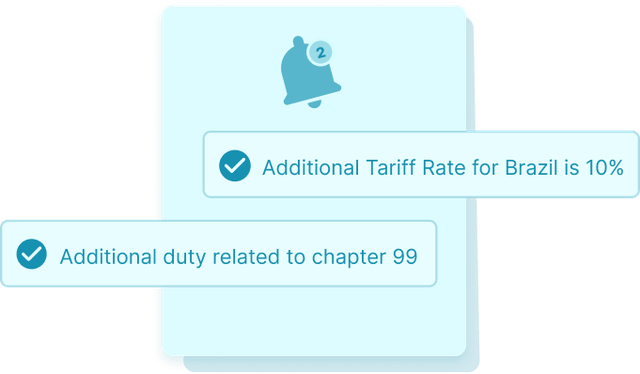
Import Requirements
Key chain
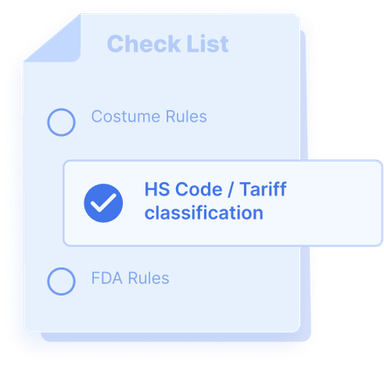

Import Data
Key chain


AI Insight
Plastic Bucket under HS Code 3924-24 shows growing demand in 12 emerging markets with favorable duty rates and limited competition. Our AI has identified key compliance requirements, optimal sourcing regions, and upcoming tariff changes that could impact your margins. See the complete analysis to discover specific opportunities.










Market
Opportunities
Top 5 Partners by Quantity
 United States
 Australia
 India
India Canada


Key chain HS Code description
Key chain harmonized system code
Product Overview A Key Chain, as defined under HS Code 8308, is a small, typically metal object used to secure keys and often attached to a keyring. This product is characterized by its durable construction, usually made of stainless steel, aluminium, or brass, and may feature decorative elements such as engravings, gems or charms. It can be processed to various levels, such as polished, satin, or antique finished, depending on the desired aesthetic appeal. The subcategories within HS Code 8308 that pertain to key chains include 830810 (Hooks, eyes and eyelets), 830820 (Tubular or bifurcated rivets), and 830890 (Other, including parts). Key chains are primarily used in the retail industry and by individuals for personal use, providing a practical solution for key organization and loss prevention. Their market positioning is based on their functionality, durability, and aesthetic appeal, offering a competitive advantage in the retail and promotional product markets. HS Code Classification & Trade Specifications The complete HS Code structure for Key Chain is 8308.90, with the first two digits (83) representing the Chapter "Miscellaneous articles of base metal", the next two digits (08) denoting the Heading "Clasps, frames with clasps, buckles, buckle-clasps, hooks, eyes, eyelets, and the like", and the final two digits (90) signifying the Subheading "Other, including parts". This product is classified under this code due to its construction from base metals and its function as a 'hook' for keys. Trade considerations for key chains include packaging in protective cases or bags to prevent damage, preservation through anti-tarnish treatments, and shipping requirements that consider the product's weight and fragility. Quality standards for key chains typically pertain to the material's durability, the product's workmanship, and the safety of any decorative elements. This description aligns with World Trade Organization and customs documentation standards, providing detailed, factual information for trade professionals.
Key chain Chapter Note
1.- For the purposes of this Chapter, parts of base metal are to be classified with their parent articles. However, articles of iron or steel of heading 73.12, 73.15, 73.17, 73.18 or 73.20, or similar articles of other base metal (Chapters 74 to 76 and 78 to 81) are not to be taken as parts of articles of this Chapter. 2.- For the purposes of heading 83.02, the word “castors” means those having a diameter (including, where appropriate, tyres) not exceeding 75 mm, or those having a diameter (including, where appropriate, tyres) exceeding 75 mm provided that the width of the wheel or tyre fitted thereto is less than 30 mm.