

Paper card|HS Code
Paper Card belong to HS heading 4820, but the exact 6-digit code depends on your product specifications. Let our AI tool analyze your product details and provide the precise HS code and tariff information.
Paper Card HS Codes
Exercise books
Other than Registers, account books, notebooks, order books, receipt books, letter pads, memorandum pads, diaries and similar articles, Exercise books, Binders (other than book covers), folders and file covers, Manifold business forms and interleaved carbon sets, and Albums for samples or for collections
Binders (other than book covers), folders and file covers
Manifold business forms and interleaved carbon sets
Albums for samples or for collections
Registers, account books, notebooks, order books, receipt books, letter pads, memorandum pads, diaries and similar articles

DeepBeez

Founded in 2025
Tariff Tracker
Paper card
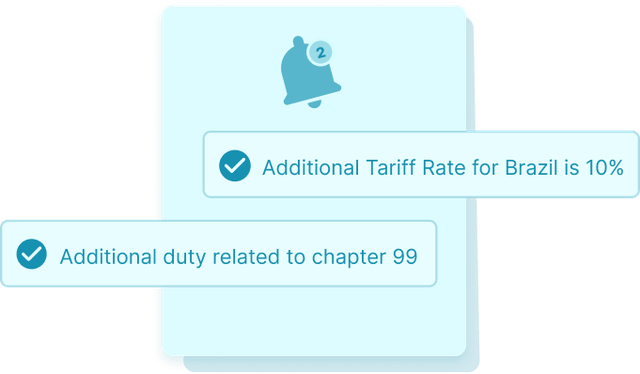
Import Requirements
Paper card

Import Data
Paper card


AI Insight
Plastic Bucket under HS Code 3924-24 shows growing demand in 12 emerging markets with favorable duty rates and limited competition. Our AI has identified key compliance requirements, optimal sourcing regions, and upcoming tariff changes that could impact your margins. See the complete analysis to discover specific opportunities.










Market
Opportunities
Top 5 Partners by Quantity
 United States
 Australia
 India
India Canada


Paper card HS Code description
Paper card harmonized system code
Product Overview The Paper Card, classified under HS Code 4820, is a specialized paper product that is primarily used for recording, presenting, and communicating information. The Paper Card is characterized by its thickness, texture, and durability, which are scrutinized during the manufacturing process to ensure adherence to international standards. These cards can be uncoated or coated, embossed, colored, printed, or punched, providing a wide range of customization options. The HS Code 4820 specifically relates to registers, account books, notebooks, order books, receipt books, letter pads, memorandum pads, diaries, and similar articles, exercise books, blotting pads, binders, folders, file covers, and similar paper or paperboard articles. The Paper Card under this category is primarily used in food service for menu cards, retail for greeting cards, and processing industries for instruction cards. Its competitive advantage lies in its versatility, cost-effectiveness, and wide range of applications. HS Code Classification & Trade Specifications The full 6-digit HS Code for Paper Card is 4820.10, which falls under Chapter 48 (Paper and Paperboard; articles of paper pulp, of paper or of paperboard), Heading 20 (Registers, account books, notebooks, order books, receipt books, letter pads, memorandum pads, diaries, and similar articles), and Subheading 10 (Diaries, notebooks, and address books, bound; memorandum pads, letter pads and similar articles). The Paper Card falls under this specific code due to its paper composition and its primary use as a medium for recording and presenting information. In terms of trade, Paper Cards are typically packaged in protective boxes or sleeves to prevent damage and preserve quality during transit. They are shipped according to international shipping regulations and requirements. The quality of Paper Cards is upheld by compliance with global standards, including ISO 9001 for quality management. This ensures that the product is consistent, reliable, and meets both customer and regulatory requirements.
Paper card Chapter Note
1.- For the purposes of this Chapter, except where the context otherwise requires, a reference to “paper” includes references to paperboard (irrespective of thickness or weight per m²). 2.- This Chapter does not cover : (a) Articles of Chapter 30; (b) Stamping foils of heading 32.12; (c) Perfumed papers or papers impregnated or coated with cosmetics (Chapter 33); (d) Paper or cellulose wadding impregnated, coated or covered with soap or detergent (heading 34.01), or with polishes, creams or similar preparations (heading 34.05); (e) Sensitised paper or paperboard of headings 37.01 to 37.04; (f) Paper impregnated with diagnostic or laboratory reagents (heading 38.22); (g) Paper-reinforced stratified sheeting of plastics, or one layer of paper or paperboard coated or covered with a layer of plastics, the latter constituting more than half the total thickness, or articles of such materials, other than wall coverings of heading 48.14 (Chapter 39); (h) Articles of heading 42.02 (for example, travel goods); (ij) Articles of Chapter 46 (manufactures of plaiting material); (k) Paper yarn or textile articles of paper yarn (Section XI); (l) Articles of Chapter 64 or Chapter 65; (m) Abrasive paper or paperboard (heading 68.05) or paper- or paperboard-backed mica (heading 68.14) (paper and paperboard coated with mica powder are, however, to be classified in this Chapter); (n) Metal foil backed with paper or paperboard (generally Section XIV or XV); (o) Articles of heading 92.09; (p) Articles of Chapter 95 (for example, toys, games, sports requisites); or (q) Articles of Chapter 96 (for example, buttons, sanitary towels (pads) and tampons, napkins (diapers) and napkin liners). 3.- Subject to the provisions of Note 7, headings 48.01 to 48.05 include paper and paperboard which have been subjected to calendering, super-calendering, glazing or similar finishing, false water-marking or surface sizing, and also paper, paperboard, cellulose wadding and webs of cellulose fibres, coloured or marbled throughout the mass by any method. Except where heading 48.03 otherwise requires, these headings do not apply to paper, paperboard, cellulose wadding or webs of cellulose fibres which have been otherwise processed. 4.- In this Chapter the expression “newsprint” means uncoated paper of a kind used for the printing of newspapers, of which not less than 50 % by weight of the total fibre content consists of wood fibres obtained by a mechanical or chemi-mechanical process, unsized or very lightly sized, having a surface roughness Parker Print Surf (1 MPa) on each side exceeding 2.5 micrometres (microns), weighing not less than 40 g/m² and not more than 65 g/m², and applies only to paper : (a) in strips or rolls of a width exceeding 28 cm; or (b) in rectangular (including square) sheets with one side exceeding 28 cm and the other side exceeding 15 cm in the unfolded state. 5.- For the purposes of heading 48.02, the expressions “paper and paperboard, of a kind used for writing, printing or other graphic purposes” and “non perforated punch-cards and punch tape paper” mean paper and paperboard made mainly from bleached pulp or from pulp obtained by a mechanical or chemi-mechanical process and satisfying any of the following criteria : (A) For paper or paperboard weighing not more than 150 g/m2 : (a) containing 10 % or more of fibres obtained by a mechanical or chemi-mechanical process, and1. weighing not more than 80 g/m2, or 2. coloured throughout the mass; or (b) containing more than 8 % ash, and 1. weighing not more than 80 g/m2, or 2. coloured throughout the mass; or (c) containing more than 3 % ash and having a brightness of 60 % or more; or (d) containing more than 3 % but not more than 8 % ash, having a brightness less than 60 %, and a burst index equal to or less than 2.5 kPa·m2/g; or (e) containing 3 % ash or less, having a brightness of 60 % or more and a burst index equal to or less than 2.5 kPa·m2/g. (B) For paper or paperboard weighing more than 150 g/m2 : (a) coloured throughout the mass; or (b) having a brightness of 60 % or more, and 1. a caliper of 225 micrometres (microns) or less, or 2. a caliper of more than 225 micrometres (microns) but not more than 508 micrometres (microns) and an ash content of more than 3 %; or (c) having a brightness of less than 60 %, a caliper of 254 micrometres (microns) or less and an ash content of more than 8 %. Heading 48.02 does not, however, cover filter paper or paperboard (including tea-bag paper) or felt paper or paperboard. 6.- In this Chapter “kraft paper and paperboard” means paper and paperboard of which not less than 80 % by weight of the total fibre content consists of fibres obtained by the chemical sulphate or soda processes. 7.- Except where the terms of the headings otherwise require, paper, paperboard, cellulose wadding and webs of cellulose fibres answering to a description in two or more of the headings 48.01 to 48.11 are to be classified under that one of such headings which occurs last in numerical order in the Nomenclature. 8.- Headings 48.03 to 48.09 apply only to paper, paperboard, cellulose wadding and webs of cellulose fibres : (a) in strips or rolls of a width exceeding 36 cm; or (b) in rectangular (including square) sheets with one side exceeding 36 cm and the other side exceeding 15 cm in the unfolded state. 9.- For the purposes of heading 48.14, the expression “wallpaper and similar wall coverings” applies only to : (a) Paper in rolls, of a width of not less than 45 cm and not more than 160 cm, suitable for wall or ceiling decoration : (i) Grained, embossed, surface-coloured, design-printed or otherwise surface-decorated (for example, with textile flock), whether or not coated or covered with transparent protective plastics; (ii) With an uneven surface resulting from the incorporation of particles of wood, straw, etc.; (iii) Coated or covered on the face side with plastics, the layer of plastics being grained, embossed, coloured, design-printed or otherwise decorated; or (iv) Covered on the face side with plaiting material, whether or not bound together in parallel strands or woven; (b) Borders and friezes, of paper, treated as above, whether or not in rolls, suitable for wall or ceiling decoration; (c) Wall coverings of paper made up of several panels, in rolls or sheets, printed so as to make up a scene, design or motif when applied to a wall. Products on a base of paper or paperboard, suitable for use both as floor coverings and as wall coverings, are to be classified in heading 48.23. 10.- Heading 48.20 does not cover loose sheets or cards, cut to size, whether or not printed, embossed or perforated.11.- Heading 48.23 applies, inter alia, to perforated paper or paperboard cards for Jacquard or similar machines and paper lace. 12.- Except for the goods of heading 48.14 or 48.21, paper, paperboard, cellulose wadding and articles thereof, printed with motifs, characters or pictorial representations, which are not merely subsidiary to the primary use of the goods, fall in Chapter 49.