


Placemat|HS Code
Placemat belong to HS heading 4601, but the exact 6-digit code depends on your product specifications. Let our AI tool analyze your product details and provide the precise HS code and tariff information.
Placemat HS Codes
Mats, matting and screens of vegetable materials Of bamboo
Other than Mats, matting and screens of vegetable materials Of bamboo
Mats, matting and screens of vegetable materials Other than Of bamboo and Of rattan
Other than Mats, matting and screens of vegetable materials Other than Of bamboo, Of rattan, and Of other vegetable materials
Other than Mats, matting and screens of vegetable materials Of rattan
Mats, matting and screens of vegetable materials Of rattan
Other than Mats, matting and screens of vegetable materials Of other vegetable materials

DeepBeez

Founded in 2025
Tariff Tracker
Placemat
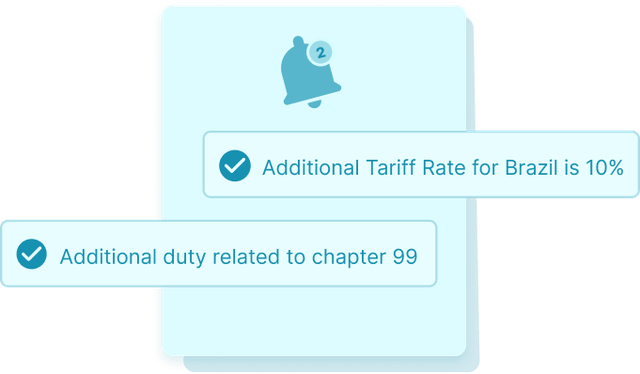
Import Requirements
Placemat
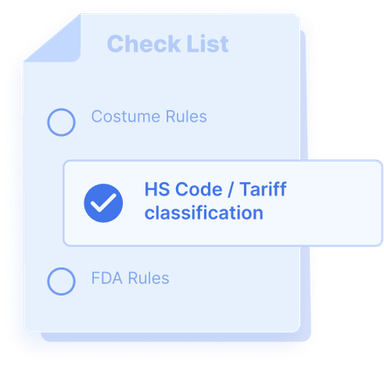
Import Data
Placemat


AI Insight
Plastic Bucket under HS Code 3924-24 shows growing demand in 12 emerging markets with favorable duty rates and limited competition. Our AI has identified key compliance requirements, optimal sourcing regions, and upcoming tariff changes that could impact your margins. See the complete analysis to discover specific opportunities.










Market
Opportunities
Top 5 Partners by Quantity
 United States
 Australia
 India
India Canada


Placemat HS Code description
Placemat harmonized system code
Product Overview A Placemat, classified under HS Code 4601, is a piece of material placed at a dining table setting for aesthetic and protective purposes. The Placemat is constructed from plaiting materials, such as reeds, rushes, osier, raffia, and other vegetable materials. The key characteristics of this product include its physical specifications such as its shape (often rectangular or round), size, and weight. The Placemat under HS Code 4601 undergoes minimal processing, maintaining the natural, organic look of the plaiting materials. The quality attributes include durability, flexibility, and resistance to heat and stains. Within the HS Code 4601, Placemats can be further classified into woven or nonwoven, dyed or undyed varieties. Commercial applications of these Placemats include use in food service establishments like restaurants and cafes, in retail for home décor, and in the processing industries for packaging. The value proposition of these Placemats lies in their eco-friendly nature, durability, and aesthetic appeal. HS Code Classification & Trade Specifications The HS Code 4601 can be broken down hierarchically as follows: Chapter 46 (Manufactures of straw, esparto or other plaiting materials), Heading 01 (Plaits and similar products of plaiting materials, whether or not assembled into strips). These products, including Placemats, fall under this specific code due to their construction from plaiting materials. Trade considerations for Placemats include packaging in shrink wrap or carton boxes for protection, and preservation methods such as keeping them in dry, well-ventilated environments to prevent mold growth. Shipping requirements often involve palletization for ease of handling and transportation. The quality standards for Placemats under HS Code 4601 are determined by their durability, heat and stain resistance, and the absence of defects such as fraying or color inconsistency. As per WTO and customs documentation standards, the description of the product for international trade should accurately reflect these characteristics and comply with the respective HS Code classification.
Placemat Chapter Note
1.- In this Chapter the expression “plaiting materials” means materials in a state or form suitable for plaiting, interlacing or similar processes; it includes straw, osier or willow, bamboos, rattans, rushes, reeds, strips of wood, strips of other vegetable material (for example, strips of bark, narrow leaves and raffia or other strips obtained from broad leaves), unspun natural textile fibres, monofilament and strip and the like of plastics and strips of paper, but not strips of leather or composition leather or of felt or nonwovens, human hair, horsehair, textile rovings or yarns, or monofilament and strip and the like of Chapter 54. 2.- This Chapter does not cover : (a) Wall coverings of heading 48.14; (b) Twine, cordage, ropes or cables, plaited or not (heading 56.07); (c) Footwear or headgear or parts thereof of Chapter 64 or 65; (d) Vehicles or bodies for vehicles of basketware (Chapter 87); or (e) Articles of Chapter 94 (for example, furniture, luminaires and lighting fittings). 3.- For the purposes of heading 46.01, the expression “plaiting materials, plaits and similar products of plaiting materials, bound together in parallel strands” means plaiting materials, plaits and similar products of plaiting materials, placed side by side and bound together, in the form of sheets, whether or not the binding materials are of spun textile materials.