


Pressure sensor Hs Code
HS Code: 9026.20
pressure sensor classified under HS code 9026.20
Chapter
90Optical, photographic, cinematographic, measuring, checking, medical or surgical instruments and apparatus , Parts and accessories
Heading
9026Instruments and apparatus for measuring or checking the flow, level, pressure or other variables of liquids or gases (for example, flow meters, level gauges, manometers, heat meters), excluding instruments and apparatus of heading 9014, 9015, 9028 or 9032 , Parts and accessories thereof
Sub Heading
9026.20For measuring or checking pressure

DeepBeez

Founded in 2025
Tariff Tracker
Pressure sensor
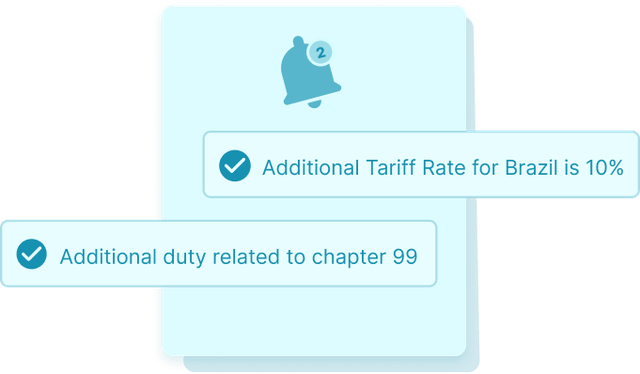
Import Requirements
Pressure sensor


Import Data
Pressure sensor


AI Insight
Plastic Bucket under HS Code 3924-24 shows growing demand in 12 emerging markets with favorable duty rates and limited competition. Our AI has identified key compliance requirements, optimal sourcing regions, and upcoming tariff changes that could impact your margins. See the complete analysis to discover specific opportunities.









Market
Opportunities
Top 5 Partners by Quantity
 United States
 Australia
 India
India Canada


Pressure sensor HS Code description
Pressure sensor harmonized system code
Product Overview Pressure sensors classified under HS Code 902620 are precision electromechanical devices designed to measure and monitor pressure levels in gases or liquids. These sensors convert physical pressure into an electrical signal for accurate quantitative analysis. Typically constructed from corrosion-resistant materials such as stainless steel or specialized alloys, they exhibit high durability and stability across a broad range of operating conditions. Key physical specifications include measurement ranges spanning from vacuum levels (e.g., -1 bar) up to several hundred bars, with output signals standardized in millivolts, milliamperes, or digital protocols (4-20 mA, 0-10 V, or fieldbus interfaces). The classification under HS Code 902620 encompasses subcategories including piezoresistive, capacitive, piezoelectric, and strain gauge pressure sensors, each tailored for specific responsiveness and environmental resilience. These sensors find extensive application in food service and processing industries for pressure regulation, quality control, and safety monitoring in pneumatic and hydraulic systems. Their robust design and compliance with international metrology standards position them as essential components in global supply chains, offering reliable performance and facilitating regulatory adherence. HS Code Classification & Trade Specifications The HS Code 902620 is defined within Chapter 90 (Optical, photographic, cinematographic, measuring, checking, precision, medical or surgical instruments and apparatus), Heading 9026 (Instruments and apparatus for measuring or checking pressure), with Subheading 902620 specifying pressure measuring instruments specifically. Classification under this code is based on the device’s primary function to measure pressure, distinct from other measuring instruments by its operational principle and output type. For international trade, pressure sensors are commonly packaged in anti-static, moisture-resistant materials with shock-absorbent internal supports to preserve calibration integrity during transit. Shipping methods adhere to ISO 9001 quality management standards and often require compliance with RoHS and CE certifications for electronic components. Preservation involves controlled humidity and temperature to prevent sensor degradation. Documentation must reflect precise product specifications, including measurement range, accuracy (often ±0.1% FS), and response time, to ensure customs classification accuracy and facilitate expedited clearance processes under WTO trade agreements. The consistent use of this HS code across jurisdictions aids import/export businesses and customs brokers in maintaining compliance and streamlining international logistics.
Pressure sensor Chapter Note
1.- This Chapter does not cover : (a) Articles of a kind used in machines, appliances or for other technical uses, of vulcanised rubber other than hard rubber (heading 40.16), of leather or of composition leather (heading 42.05) or of textile material (heading 59.11); (b) Supporting belts or other support articles of textile material, whose intended effect on the organ to be supported or held derives solely from their elasticity (for example, maternity belts, thoracic support bandages, abdominal support bandages, supports for joints or muscles) (Section XI); (c) Refractory goods of heading 69.03; ceramic wares for laboratory, chemical or other technical uses, of heading 69.09; (d) Glass mirrors, not optically worked, of heading 70.09, or mirrors of base metal or of precious metal, not being optical elements (heading 83.06 or Chapter 71); (e) Goods of heading 70.07, 70.08, 70.11, 70.14, 70.15 or 70.17; (f) Parts of general use, as defined in Note 2 to Section XV, of base metal (Section XV) or similar goods of plastics (Chapter 39); however, articles specially designed for use exclusively in implants in medical, surgical, dental or veterinary sciences are to be classified in heading 90.21; (g) Pumps incorporating measuring devices, of heading 84.13; weight-operated counting or checking machinery, or separately presented weights for balances (heading 84.23); lifting or handling machinery (headings 84.25 to 84.28); paper or paperboard cutting machines of all kinds (heading 84.41); fittings for adjusting work or tools on machine-tools or water-jet cutting machines, of heading 84.66, including fittings with optical devices for reading the scale (for example, “optical” dividing heads) but not those which are in themselves essentially optical instruments (for example, alignment telescopes); calculating machines (heading 84.70); valves or other appliances of heading 84.81; machines and apparatus (including apparatus for the projection or drawing of circuit patterns on sensitised semiconductor materials) of heading 84.86; (h) Searchlights or spotlights of a kind used for cycles or motor vehicles (heading 85.12); portable electric lamps of heading 85.13; cinematographic sound recording, reproducing or re-recording apparatus (heading 85.19); sound-heads (heading 85.22); television cameras, digital cameras and video camera recorders (heading 85.25); radar apparatus, radio navigational aid apparatus or radio remote control apparatus (heading 85.26); connectors for optical fibres, optical fibre bundles or cables (heading 85.36); numerical control apparatus of heading 85.37; sealed beam lamp units of heading 85.39; optical fibre cables of heading 85.44; (ij) Searchlights or spotlights of heading 94.05; (k) Articles of Chapter 95; (l) Monopods, bipods, tripods and similar articles, of heading 96.20; (m) Capacity measures, which are to be classified according to their constituent material; or (n) Spools, reels or similar supports (which are to be classified according to their constituent material, for example, in heading 39.23 or Section XV).2.- Subject to Note 1 above, parts and accessories for machines, apparatus, instruments or articles of this Chapter are to be classified according to the following rules : (a) Parts and accessories which are goods included in any of the headings of this Chapter or of Chapter 84, 85 or 91 (other than heading 84.87, 85.48 or 90.33) are in all cases to be classified in their respective headings; (b) Other parts and accessories, if suitable for use solely or principally with a particular kind of machine, instrument or apparatus, or with a number of machines, instruments or apparatus of the same heading (including a machine, instrument or apparatus of heading 90.10, 90.13 or 90.31) are to be classified with the machines, instruments or apparatus of that kind; (c) All other parts and accessories are to be classified in heading 90.33. 3.- The provisions of Notes 3 and 4 to Section XVI apply also to this Chapter. 4.- Heading 90.05 does not apply to telescopic sights for fitting to arms, periscopic telescopes for fitting to submarines or tanks, or to telescopes for machines, appliances, instruments or apparatus of this Chapter or Section XVI; such telescopic sights and telescopes are to be classified in heading 90.13. 5.- Measuring or checking optical instruments, appliances or machines which, but for this Note, could be classified both in heading 90.13 and in heading 90.31 are to be classified in heading 90.31. 6.- For the purposes of heading 90.21, the expression “orthopaedic appliances” means appliances for : - Preventing or correcting bodily deformities; or - Supporting or holding parts of the body following an illness, operation or injury. Orthopaedic appliances include footwear and special insoles designed to correct orthopaedic conditions, provided that they are either (1) made to measure or (2) mass-produced, presented singly and not in pairs and designed to fit either foot equally. 7.- Heading 90.32 applies only to : (a) Instruments and apparatus for automatically controlling the flow, level, pressure or other variables of liquids or gases, or for automatically controlling temperature, whether or not their operation depends on an electrical phenomenon which varies according to the factor to be automatically controlled, which are designed to bring this factor to, and maintain it at, a desired value, stabilised against disturbances, by constantly or periodically measuring its actual value; and (b) Automatic regulators of electrical quantities, and instruments or apparatus for automatically controlling non-electrical quantities the operation of which depends on an electrical phenomenon varying according to the factor to be controlled, which are designed to bring this factor to, and maintain it at, a desired value, stabilised against disturbances, by constantly or periodically measuring its actual value.