


Rubber conveyor belt Hs Code
HS Code: 4010.12
rubber conveyor belt classified under HS code 4010.12
Chapter
40Rubber and articles thereof
Heading
4010Conveyor or transmission belts or belting, of vulcanized rubber
Sub Heading
4010.12Conveyor belts and belting reinforced only with textile materials

DeepBeez

Founded in 2025
Tariff Tracker
Rubber conveyor belt
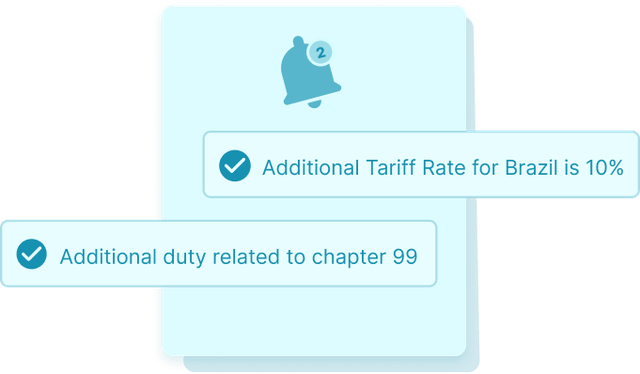
Import Requirements
Rubber conveyor belt


Import Data
Rubber conveyor belt


AI Insight
Plastic Bucket under HS Code 3924-24 shows growing demand in 12 emerging markets with favorable duty rates and limited competition. Our AI has identified key compliance requirements, optimal sourcing regions, and upcoming tariff changes that could impact your margins. See the complete analysis to discover specific opportunities.










Market
Opportunities
Top 5 Partners by Quantity
 United States
 Australia
 India
India Canada


Rubber conveyor belt HS Code description
Rubber conveyor belt harmonized system code
Product Overview Rubber conveyor belts classified under HS Code 401012 refer to continuous, flexible belts composed primarily of vulcanized rubber, engineered for material handling applications. These belts exhibit key physical characteristics including a uniform thickness typically ranging from 3 mm to 20 mm, tensile strength values between 10 to 30 MPa, and abrasion resistance suited for heavy-duty operational environments. The product is produced through multi-stage processing involving calendaring, extrusion, and vulcanization to ensure durability, elasticity, and resistance to environmental factors such as oil, heat, and chemical exposure. Within HS Code 401012, subcategories distinguish belts by reinforcement type—such as fabric-reinforced or steel-cord reinforced—and surface finish, including smooth or textured variants. Commercially, these conveyor belts serve critical roles across diverse sectors including food processing plants, retail distribution centers, and industrial manufacturing lines, facilitating efficient transport of bulk and packaged goods. Market positioning is defined by the product’s compliance with international quality benchmarks, operational reliability, and adaptability to customized specifications, offering importers and exporters a competitively robust solution for global supply chain demands. HS Code Classification & Trade Specifications The HS Code 401012 falls under Chapter 40, which covers rubber and articles thereof, specifically within Heading 4010: conveyor or transmission belts of vulcanized rubber, and Subheading 4010.12, designating belts predominantly composed of rubber with textile reinforcement. This hierarchical classification is predicated on the product’s material composition, manufacturing process, and functional use as a conveyor medium. Trade documentation necessitates detailed compliance with packaging norms, commonly involving coiled belts secured with corrosion-resistant bindings and enclosed in moisture-proof wrapping to preserve vulcanized integrity during transit. Shipping protocols often require temperature-controlled containers to prevent premature aging or deformation. Quality standards aligned with ISO 14890 and DIN 22102 specify parameters such as tensile strength, elongation at break, and abrasion resistance, ensuring conformity with WTO trade facilitation requirements. Accurate classification under HS Code 401012 supports streamlined customs clearance, tariff assessment, and adherence to bilateral trade agreements, thereby facilitating efficient international commerce for import/export operators and customs brokers.
Rubber conveyor belt Chapter Note
1.- Except where the context otherwise requires, throughout the Nomenclature the expression “rubber” means the following products, whether or not vulcanised or hard : natural rubber, balata, gutta-percha, guayule, chicle and similar natural gums, synthetic rubber, factice derived from oils, and such substances reclaimed. 2.- This Chapter does not cover : (a) Goods of Section XI (textiles and textile articles); (b) Footwear or parts thereof of Chapter 64; (c) Headgear or parts thereof (including bathing caps) of Chapter 65; (d) Mechanical or electrical appliances or parts thereof of Section XVI (including electrical goods of all kinds), of hard rubber; (e) Articles of Chapter 90, 92, 94 or 96; or (f) Articles of Chapter 95 (other than sports gloves, mittens and mitts and articles of headings 40.11 to 40.13). 3.- In headings 40.01 to 40.03 and 40.05, the expression “primary forms” applies only to the following forms : (a) Liquids and pastes (including latex, whether or not pre-vulcanised, and other dispersions and solutions); (b) Blocks of irregular shape, lumps, bales, powders, granules, crumbs and similar bulk forms. 4.- In Note 1 to this Chapter and in heading 40.02, the expression “synthetic rubber” applies to : (a) Unsaturated synthetic substances which can be irreversibly transformed by vulcanisation with sulphur into non-thermoplastic substances which, at a temperature between 18 C and 29 C, will not break on being extended to three times their original length and will return, after being extended to twice their original length, within a period of five minutes, to a length not greater than one and a half times their original length. For the purposes of this test, substances necessary for the cross-linking, such as vulcanising activators or accelerators, may be added; the presence of substances as provided for by Note 5 (B) (ii) and (iii) is also permitted. However, the presence of any substances not necessary for the cross-linking, such as extenders, plasticisers and fillers, is not permitted; (b) Thioplasts (TM); and (c) Natural rubber modified by grafting or mixing with plastics, depolymerised natural rubber, mixtures of unsaturated synthetic substances with saturated synthetic high polymers provided that all the above-mentioned products comply with the requirements concerning vulcanisation, elongation and recovery in (a) above. 5.- (A) Headings 40.01 and 40.02 do not apply to any rubber or mixture of rubbers which has been compounded, before or after coagulation, with : (i) vulcanising agents, accelerators, retarders or activators (other than those added for the preparation of pre-vulcanised rubber latex); (ii) pigments or other colouring matter, other than those added solely for the purpose of identification; (iii) plasticisers or extenders (except mineral oil in the case of oil-extended rubber), fillers, reinforcing agents, organic solvents or any other substances, except those permitted under (B); (B) The presence of the following substances in any rubber or mixture of rubbers shall not affect its classification in heading 40.01 or 40.02, as the case may be, provided that such rubber or mixture of rubbers retains its essential character as a raw material : (i) emulsifiers or anti-tack agents; (ii) small amounts of breakdown products of emulsifiers; (iii) very small amounts of the following : heat-sensitive agents (generally for obtaining thermosensitive rubber latexes), cationic surface-active agents (generally for obtaining electropositive rubber latexes), antioxidants, coagulants, crumbling agents, freeze-resisting agents, peptisers, preservatives, stabilisers, viscosity-control agents, or similar special-purpose additives.6.- For the purposes of heading 40.04, the expression “waste, parings and scrap” means rubber waste, parings and scrap from the manufacture or working of rubber and rubber goods definitely not usable as such because of cutting-up, wear or other reasons. 7.- Thread wholly of vulcanised rubber, of which any cross-sectional dimension exceeds 5 mm, is to be classified as strip, rods or profile shapes, of heading 40.08. 8.- Heading 40.10 includes conveyor or transmission belts or belting of textile fabric impregnated, coated, covered or laminated with rubber or made from textile yarn or cord impregnated, coated, covered or sheathed with rubber. 9.- In headings 40.01, 40.02, 40.03, 40.05 and 40.08, the expressions “plates”, “sheets” and “strip” apply only to plates, sheets and strip and to blocks of regular geometric shape, uncut or simply cut to rectangular (including square) shape, whether or not having the character of articles and whether or not printed or otherwise surface-worked, but not otherwise cut to shape or further worked. In heading 40.08 the expressions “rods” and “profile shapes” apply only to such products, whether or not cut to length or surface-worked but not otherwise worked.