


Safety jacket|HS Code
Safety Jacket belong to HS heading 6307, but the exact 6-digit code depends on your product specifications. Let our AI tool analyze your product details and provide the precise HS code and tariff information.
Safety Jacket HS Codes
Floorcloths, dishcloths, dusters and similar cleaning cloths
Lifejackets and lifebelts
Other than Floorcloths, dishcloths, dusters and similar cleaning cloths and Lifejackets and lifebelts

DeepBeez

Founded in 2025
Tariff Tracker
Safety jacket
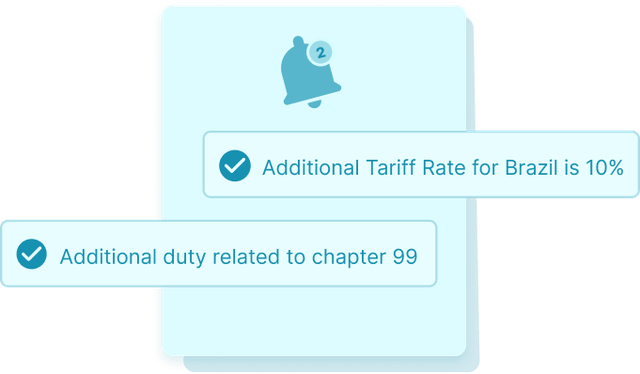
Import Requirements
Safety jacket
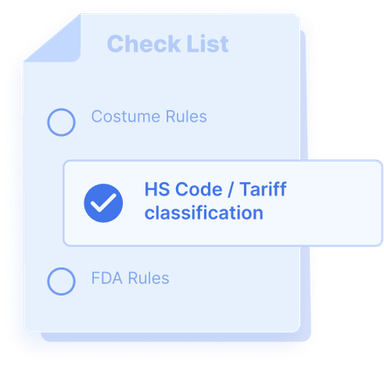
Import Data
Safety jacket


AI Insight
Plastic Bucket under HS Code 3924-24 shows growing demand in 12 emerging markets with favorable duty rates and limited competition. Our AI has identified key compliance requirements, optimal sourcing regions, and upcoming tariff changes that could impact your margins. See the complete analysis to discover specific opportunities.










Market
Opportunities
Top 5 Partners by Quantity
 United States
 Australia
 India
India Canada


Safety jacket HS Code description
Safety jacket harmonized system code
Product Overview The Safety Jacket under HS Code 6307 is a protective garment designed to ensure safety and visibility in various commercial and industrial environments. These jackets have distinctive physical attributes including high-visibility colors, reflective strips, and are often made from durable, lightweight materials such as polyester or nylon. They are typically waterproof and weather-resistant, ensuring the wearer's comfort under diverse conditions. Within HS Code 6307, safety jackets fall under the 'Other made-up articles' subheading, which broadly covers textiles not classified elsewhere. Commercial applications for these jackets are vast, with primary uses in the construction, transportation, warehousing, and emergency services sectors, as well as retail outlets selling safety equipment. The value proposition of the safety jacket lies in its ability to enhance workers' safety, particularly in low light or high-risk environments. Its competitive advantage comes from its durable construction, versatile use, and compliance with international safety standards. HS Code Classification & Trade Specifications The Safety Jacket is classified under the full 6-digit HS Code 6307.90, which falls within Chapter 63 (Textiles; other made up textile articles; sets; worn clothing and worn textile articles; rags), Heading 6307 (Other made up articles, including dress patterns), and Subheading 6307.90 (Other). This classification is due to the jacket's textile composition, its status as a finished, made-up article, and its protective characteristics, which differentiate it from other apparel. Trade considerations for the Safety Jacket include packaging in secure, moisture-resistant materials to maintain product integrity during transit. Shipping requirements usually involve bulk transportation in compliance with international freight standards. The jackets are produced according to recognized quality benchmarks, including ANSI/ISEA 107 standards for high visibility safety apparel. As with all products falling under HS Code 6307, the Safety Jacket must comply with the World Trade Organization (WTO) and customs documentation standards, emphasizing the need for accurate, factual product descriptions in all trade communications.
Safety jacket Chapter Note
1.- Sub-Chapter I applies only to made up articles, of any textile fabric. 2.- Sub-Chapter I does not cover : (a) Goods of Chapters 56 to 62; or (b) Worn clothing or other worn articles of heading 63.09. 3.- Heading 63.09 applies only to the following goods : (a) Articles of textile materials : (i) Clothing and clothing accessories, and parts thereof; (ii) Blankets and travelling rugs; (iii) Bed linen, table linen, toilet linen and kitchen linen; (iv) Furnishing articles, other than carpets of headings 57.01 to 57.05 and tapestries of heading 58.05; (b) Footwear and headgear of any material other than asbestos. In order to be classified in this heading, the articles mentioned above must comply with both of the following requirements : (i) they must show signs of appreciable wear, and (ii) they must be presented in bulk or in bales, sacks or similar packings.