


Sandals|HS Code
Sandals belong to HS heading 6402, but the exact 6-digit code depends on your product specifications. Let our AI tool analyze your product details and provide the precise HS code and tariff information.
Sandals HS Codes
Footwear with upper straps or thongs assembled to the sole by means of plugs (zoris)
Other footwear Covering the ankle
Other footwear Other than Covering the ankle
Sports footwear Other than Ski-boots, cross-country ski footwear and snowboard boots
Sports footwear Ski-boots, cross-country ski footwear and snowboard boots

DeepBeez

Founded in 2025
Tariff Tracker
Sandals
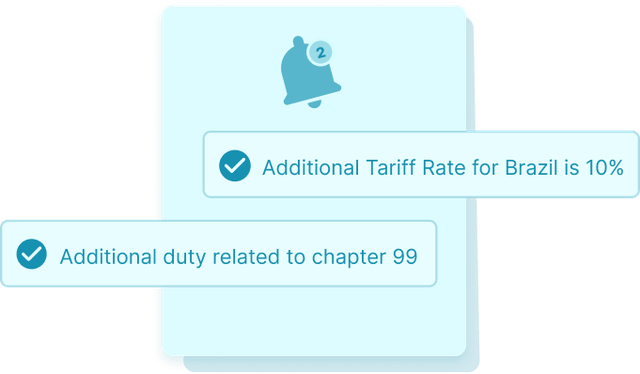
Import Requirements
Sandals
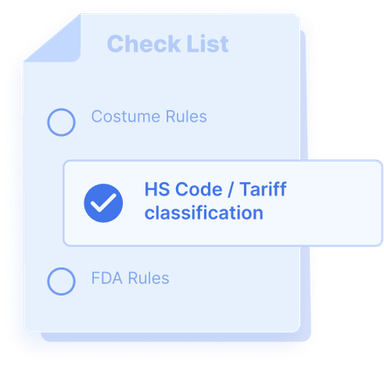
Import Data
Sandals


AI Insight
Plastic Bucket under HS Code 3924-24 shows growing demand in 12 emerging markets with favorable duty rates and limited competition. Our AI has identified key compliance requirements, optimal sourcing regions, and upcoming tariff changes that could impact your margins. See the complete analysis to discover specific opportunities.










Market
Opportunities
Top 5 Partners by Quantity
 United States
 Australia
 India
India Canada


Sandals HS Code description
Sandals harmonized system code
Product Overview Sandals classified under the Harmonized System (HS) Code 6402 are footwear items with an outer sole and upper made of rubber or plastic, designed to expose most parts of the foot. These sandals typically feature an open-toe and open-heel design, offering a cool and comfortable option for wearers in warm climates or indoor environments. They may come in various styles, from simple flip-flops to more elaborate gladiator sandals, and can be embellished with a range of materials such as beads, sequins, or fabric. The subcategories within HS Code 6402 further distinguish sandals based on their construction materials and type of fastening mechanism. These sandals are commonly utilized in retail and fashion industries, as well as in hospitality and healthcare sectors where comfort and hygiene are paramount. As a versatile and universal product, these sandals offer a competitive value proposition due to their durability, affordability, and adaptability to various fashion trends and consumer preferences. HS Code Classification & Trade Specifications The HS Code 6402 is structured under Chapter 64 (Footwear, gaiters and the like; parts of such articles), Heading 02 (Footwear with outer soles and uppers of rubber or plastics). The classification rationale for sandals under this code is due to their specific construction materials and design features. When it comes to trade considerations, these sandals are typically packaged in individual boxes or bulk containers, depending on the buyer's requirements. Preservation methods are minimal, given the durable nature of the materials used. However, care must be taken to prevent deformation during shipping. Quality standards for these sandals usually involve checking the strength and durability of the materials, the quality of fastenings, and the comfort of the design. These attributes need to be precisely measured and documented to ensure compliance with international trade regulations. The HS Code 6402 classification plays a crucial role in customs clearance, tariff calculation, and trade documentation, making it necessary for businesses to accurately classify their products under this code.
Sandals Chapter Note
1.- This Chapter does not cover : (a) Disposable foot or shoe coverings of flimsy material (for example, paper, sheeting of plastics) without applied soles. These products are classified according to their constituent material; (b) Footwear of textile material, without an outer sole glued, sewn or otherwise affixed or applied to the upper (Section XI); (c) Worn footwear of heading 63.09; (d) Articles of asbestos (heading 68.12); (e) Orthopaedic footwear or other orthopaedic appliances, or parts thereof (heading 90.21); or (f) Toy footwear or skating boots with ice or roller skates attached; shin-guards or similar protective sportswear (Chapter 95). 2.- For the purposes of heading 64.06, the term “parts” does not include pegs, protectors, eyelets, hooks, buckles, ornaments, braid, laces, pompons or other trimmings (which are to be classified in their appropriate headings) or buttons or other goods of heading 96.06. 3.- For the purposes of this Chapter : (a) the terms “rubber” and “plastics” include woven fabrics or other textile products with an external layer of rubber or plastics being visible to the naked eye; for the purpose of this provision, no account should be taken of any resulting change of colour; and (b) the term “leather” refers to the goods of headings 41.07 and 41.12 to 41.14. 4.- Subject to Note 3 to this Chapter : (a) the material of the upper shall be taken to be the constituent material having the greatest external surface area, no account being taken of accessories or reinforcements such as ankle patches, edging, ornamentation, buckles, tabs, eyelet stays or similar attachments; (b) the constituent material of the outer sole shall be taken to be the material having the greatest surface area in contact with the ground, no account being taken of accessories or reinforcements such as spikes, bars, nails, protectors or similar attachments.