
Sheet metal parts|HS Code
Sheet Metal Parts belong to HS heading 7326, but the exact 6-digit code depends on your product specifications. Let our AI tool analyze your product details and provide the precise HS code and tariff information.
Sheet Metal Parts HS Codes
Forged or stamped, but not further worked Grinding balls and similar articles for mills
Forged or stamped, but not further worked Other than Grinding balls and similar articles for mills
Other than Forged or stamped, but not further worked and Articles of iron or steel wire
Articles of iron or steel wire

DeepBeez

Founded in 2025
Tariff Tracker
Sheet metal parts
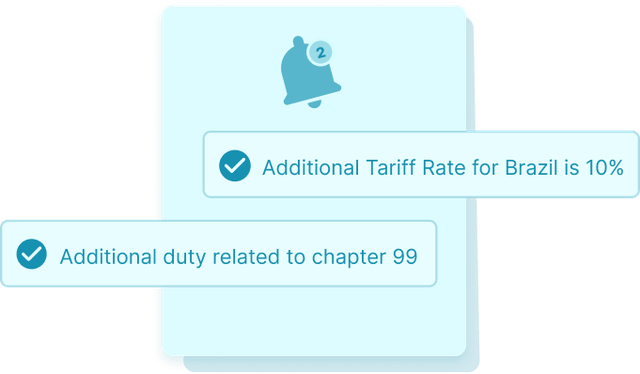
Import Requirements
Sheet metal parts
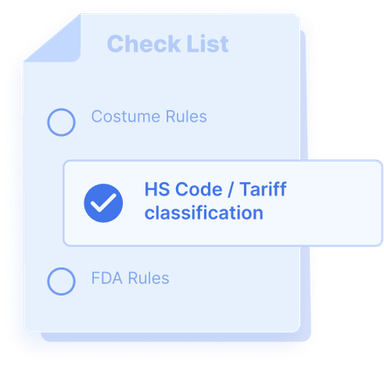
Import Data
Sheet metal parts


AI Insight
Plastic Bucket under HS Code 3924-24 shows growing demand in 12 emerging markets with favorable duty rates and limited competition. Our AI has identified key compliance requirements, optimal sourcing regions, and upcoming tariff changes that could impact your margins. See the complete analysis to discover specific opportunities.










Market
Opportunities
Top 5 Partners by Quantity
 United States
 Australia
 India
India Canada


Sheet metal parts HS Code description
Sheet metal parts harmonized system code
Product Overview Sheet Metal Parts under HS Code 7326 are defined as other articles of iron or steel which are forged or stamped but not further worked. These parts are characterized by their high strength, durability, and resistance to corrosion, making them ideal for many industrial applications. The parts can be processed at various levels, from simply cut pieces to more complex shapes bent or formed using specialized machinery. Quality attributes include dimensional accuracy, smooth surfaces, and the ability to withstand heavy loads. The HS Code 7326 is further divided into subcategories based on the specific type and function of the sheet metal part, such as parts for machinery or equipment, parts for buildings, or other miscellaneous parts. These sheet metal parts are widely used in food service, retail, and processing industries for their robustness and versatility. Their value proposition lies in their durability, cost-effectiveness, and the ability to be customized according to specific requirements. HS Code Classification & Trade Specifications The complete HS Code Structure for Sheet Metal Parts is as follows: Chapter 73 (Articles of iron or steel), Heading 26 (Other articles of iron or steel), Subheading 7326 (Other articles of iron or steel). This classification is based on the World Customs Organization's Harmonized System (HS) which classifies products based on their material composition and degree of manufacture or processing. Sheet Metal Parts fall under this code due to their iron or steel composition and the fact they are forged or stamped but not further worked. In terms of trade considerations, these parts are typically packaged in crates or pallets to prevent damage during transport. Preservation methods include coating the parts with a protective layer to prevent rusting. Shipping requirements vary depending on the size and weight of the parts but commonly involve freight shipping due to the typically large size and weight of these parts. The quality standards for these parts are set by international bodies and are measured in terms of dimensional accuracy, surface finish, and load-bearing capacity. These standards ensure the parts meet the requirements of the industries they are used in and conform to international trade regulations.
Sheet metal parts Chapter Note
1.- In this Chapter the expression “cast iron” applies to products obtained by casting in which iron predominates by weight over each of the other elements and which do not comply with the chemical composition of steel as defined in Note 1 (d) to Chapter 72. 2.- In this Chapter the word “wire” means hot or cold-formed products of any cross-sectional shape, of which no cross-sectional dimension exceeds 16 mm.