


Shim|HS Code
Shim belong to HS heading 7326, but the exact 6-digit code depends on your product specifications. Let our AI tool analyze your product details and provide the precise HS code and tariff information.
Shim HS Codes
Forged or stamped, but not further worked Grinding balls and similar articles for mills
Forged or stamped, but not further worked Other than Grinding balls and similar articles for mills
Other than Forged or stamped, but not further worked and Articles of iron or steel wire
Articles of iron or steel wire

DeepBeez

Founded in 2025
Tariff Tracker
Shim
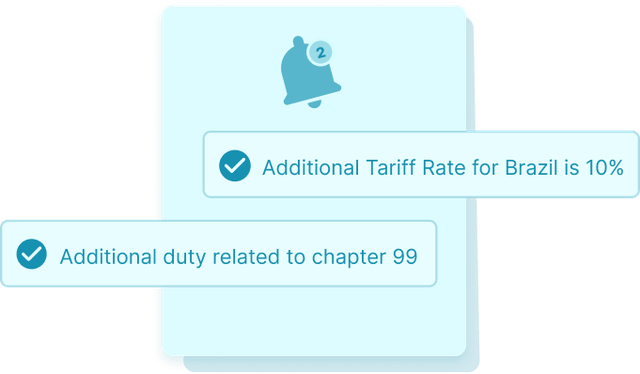
Import Requirements
Shim
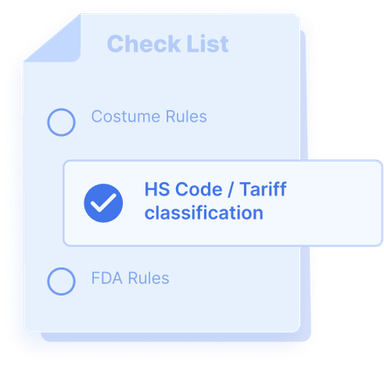
Import Data
Shim


AI Insight
Plastic Bucket under HS Code 3924-24 shows growing demand in 12 emerging markets with favorable duty rates and limited competition. Our AI has identified key compliance requirements, optimal sourcing regions, and upcoming tariff changes that could impact your margins. See the complete analysis to discover specific opportunities.










Market
Opportunities
Top 5 Partners by Quantity
 United States
 Australia
 India
India Canada


Shim HS Code description
Shim harmonized system code
Product Overview A Shim, classified under HS Code 7326, is a thin, often tapered piece of material, typically made of iron or steel, used to fill small gaps or spaces between objects, or to make slight adjustments to machinery for improved alignment. Characterized by its physical specifications, a Shim's dimensions, thickness, and material composition significantly impact its performance. Shims under HS Code 7326 are categorized into iron or steel products, further divided into other articles of iron or steel, which are not elsewhere specified or included. Their commercial applications are extensive, ranging from food service equipment adjustments to retail shelving installations, and even more advanced uses in various processing industries. The product's value proposition lies in its ability to provide fine adjustments, ensuring precise alignment and optimal operation of machinery or equipment, granting it a competitive edge in diverse industrial applications. HS Code Classification & Trade Specifications The Shim falls under the full 6-digit HS Code 7326.90, with the hierarchical breakdown being Chapter 73 (Articles of Iron or Steel), Heading 26 (Other articles of iron or steel), and Subheading 90 (Other). The classification rationale is based on the Shim's material composition, being primarily of iron or steel, and its broad usage, not fitting into more specific subheadings. Trade considerations include packaging in industrial-grade protective materials to prevent damage or deformation during transit. Preservation methods typically involve anti-corrosion treatments, given the iron or steel construction. Shipping requirements generally adhere to standard freight procedures for iron or steel products. The product's quality standards are dictated by its dimensional accuracy, material consistency, and overall durability. It's essential to note that all trade, packaging, and shipping practices comply with WTO regulations and customs documentation standards, ensuring seamless international trade operations.
Shim Chapter Note
1.- In this Chapter the expression “cast iron” applies to products obtained by casting in which iron predominates by weight over each of the other elements and which do not comply with the chemical composition of steel as defined in Note 1 (d) to Chapter 72. 2.- In this Chapter the word “wire” means hot or cold-formed products of any cross-sectional shape, of which no cross-sectional dimension exceeds 16 mm.