

Silica gel Hs Code
HS Code: 2811.22
silica gel classified under HS code 2811.22
Chapter
28Inorganic chemicals , Organic and inorganic compounds of precious metals , Of rare earth metals, of radio-active elements and of isotopes
Heading
2811Other inorganic acids and other inorganic oxygen compounds of nonmetals
Sub Heading
2811.22Other inorganic oxygen compounds of nonmetals silicon dioxide

DeepBeez

Founded in 2025
Tariff Tracker
Silica gel
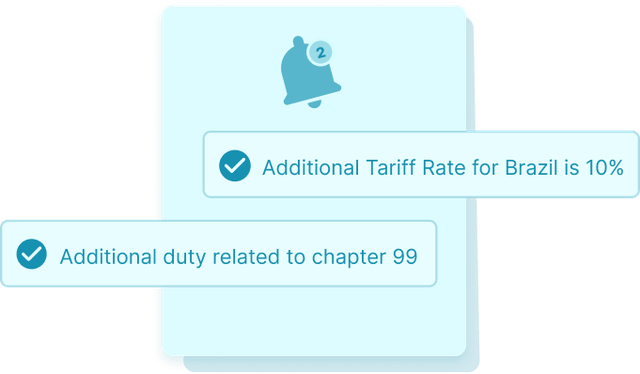
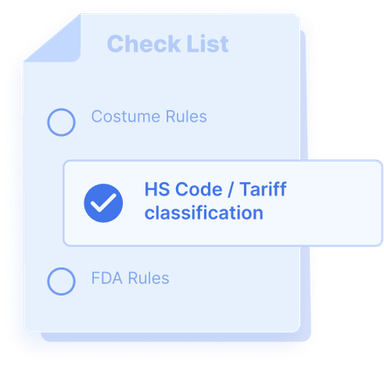
Import Requirements
Silica gel
Import Data
Silica gel


AI Insight
Plastic Bucket under HS Code 3924-24 shows growing demand in 12 emerging markets with favorable duty rates and limited competition. Our AI has identified key compliance requirements, optimal sourcing regions, and upcoming tariff changes that could impact your margins. See the complete analysis to discover specific opportunities.









Market
Opportunities
Top 5 Partners by Quantity
 United States
 Australia
 India
India Canada


Silica gel HS Code description
Silica gel harmonized system code
Product Overview Silica gel, classified under HS Code 281122, is a granular, porous, and chemically inert desiccant composed primarily of silicon dioxide (SiO₂). It is produced through the reaction of sodium silicate with sulfuric acid, resulting in a highly absorbent, amorphous silica matrix with a typical surface area ranging from 300 to 800 m²/g. This product is characterized by its high moisture adsorption capacity, thermal stability up to approximately 120°C, and non-toxic, non-flammable nature. HS Code 281122 encompasses several subcategories including activated silica gel, silica gel in granular or bead form, and indicator silica gel containing moisture-sensitive colorimetric agents. Commercially, silica gel is extensively utilized in food packaging to maintain product freshness by controlling humidity, in pharmaceutical and electronics industries for moisture protection, and in retail applications as a packaging insert to extend shelf life. Its competitive advantage lies in its reliable moisture adsorption efficiency, regulatory compliance with food-grade standards, and broad applicability across diverse industrial sectors. HS Code Classification & Trade Specifications The HS Code 281122 is structured hierarchically as follows: Chapter 28 (Inorganic chemicals; organic or inorganic compounds of precious metals), Heading 2811 (Other carbonates; commercial ammonium carbonate), and Subheading 281122 (Silica gels and similar adsorbents, granular or in the form of beads, including indicator silica gel). This classification is based on the chemical composition and physical form of the product, distinguishing silica gel from other inorganic chemicals. For international trade, silica gel is commonly packaged in moisture-resistant polyethylene bags, multi-layer laminated sachets, or bulk containers with desiccant liners to maintain low moisture content (typically below 5% by weight). Shipping conditions require protection from humidity and contamination, often necessitating sealed, airtight packaging and palletization to comply with customs and import/export regulations. Quality standards adhere to ISO 17025 accredited testing protocols, ensuring parameters such as moisture adsorption capacity, bead size distribution (commonly 2–5 mm), and impurity levels meet industry benchmarks. Compliance with WTO agreements and harmonized system nomenclature facilitates accurate customs declarations and streamlined cross-border transactions.
Silica gel Chapter Note
1.- Except where the context otherwise requires, the headings of this Chapter apply only to : (a) Separate chemical elements and separate chemically defined compounds, whether or not containing impurities; (b) The products mentioned in (a) above dissolved in water; (c) The products mentioned in (a) above dissolved in other solvents provided that the solution constitutes a normal and necessary method of putting up these products adopted solely for reasons of safety or for transport and that the solvent does not render the product particularly suitable for specific use rather than for general use; (d) The products mentioned in (a), (b) or (c) above with an added stabiliser (including an anti-caking agent) necessary for their preservation or transport; (e) The products mentioned in (a), (b), (c) or (d) above with an added anti-dusting agent or a colouring substance added to facilitate their identification or for safety reasons, provided that the additions do not render the product particularly suitable for specific use rather than for general use.2.- In addition to dithionites and sulphoxylates, stabilised with organic substances (heading 28.31), carbonates and peroxocarbonates of inorganic bases (heading 28.36), cyanides, cyanide oxides and complex cyanides of inorganic bases (heading 28.37), fulminates, cyanates and thiocyanates, of inorganic bases (heading 28.42), organic products included in heading 28.43 to 28.46 and 28.52 and carbides (heading 28.49), only the following compounds of carbon are to be classified in this Chapter : (a) Oxides of carbon, hydrogen cyanide and fulminic, isocyanic, thiocyanic and other simple or complex cyanogen acids (heading 28.11); (b) Halide oxides of carbon (heading 28.12); (c) Carbon disulphide (heading 28.13); (d) Thiocarbonates, selenocarbonates, tellurocarbonates, selenocyanates, tellurocyanates, tetrathiocyanatodiamminochromates (reineckates) and other complex cyanates, of inorganic bases (heading 28.42); (e) Hydrogen peroxide, solidified with urea (heading 28.47), carbon oxysulphide, thiocarbonyl halides, cyanogen, cyanogen halides and cyanamide and its metal derivatives (heading 28.53) other than calcium cyanamide, whether or not pure (Chapter 31). 3.- Subject to the provisions of Note 1 to Section VI, this Chapter does not cover : (a) Sodium chloride or magnesium oxide, whether or not pure, or other products of Section V; (b) Organo-inorganic compounds other than those mentioned in Note 2 above; (c) Products mentioned in Note 2, 3, 4 or 5 to Chapter 31; (d) Inorganic products of a kind used as luminophores, of heading 32.06; glass frit and other glass in the form of powder, granules or flakes, of heading 32.07; (e) Artificial graphite (heading 38.01); products put up as charges for fire-extinguishers or put up in fireextinguishing grenades, of heading 38.13; ink removers put up in packings for retail sale, of heading 38.24; cultured crystals (other than optical elements) weighing not less than 2.5 g each, of the halides of the alkali or alkaline-earth metals, of heading 38.24; (f) Precious or semi-precious stones (natural, synthetic or reconstructed) or dust or powder of such stones (headings 71.02 to 71.05), or precious metals or precious metal alloys of Chapter 71; (g) The metals, whether or not pure, metal alloys or cermets, including sintered metal carbides (metal carbides sintered with a metal), of Section XV; or (h) Optical elements, for example, of the halides of the alkali or alkaline-earth metals (heading 90.01). 4.- Chemically defined complex acids consisting of a non-metal acid of sub-Chapter II and a metal acid of sub-Chapter IV are to be classified in heading 28.11. 5.- Headings 28.26 to 28.42 apply only to metal or ammonium salts or peroxysalts. Except where the context otherwise requires, double or complex salts are to be classified in heading 28.42. 6.- Heading 28.44 applies only to : (a) Technetium (atomic No. 43), promethium (atomic No. 61), polonium (atomic No. 84) and all elements with an atomic number greater than 84; (b) Natural or artificial radioactive isotopes (including those of the precious metals or of the base metals of Sections XIV and XV), whether or not mixed together; (c) Compounds, inorganic or organic, of these elements or isotopes, whether or not chemically defined, whether or not mixed together; (d) Alloys, dispersions (including cermets), ceramic products and mixtures containing these elements or isotopes or inorganic or organic compounds thereof and having a specific radioactivity exceeding 74 Bq/g (0.002 μCi/g); (e) Spent (irradiated) fuel elements (cartridges) of nuclear reactors; (f) Radioactive residues whether or not usable. The term “isotopes”, for the purposes of this Note and of the wording of headings 28.44 and 28.45, refers to : - individual nuclides, excluding, however, those existing in nature in the monoisotopic state; - mixtures of isotopes of one and the same element, enriched in one or several of the said isotopes, that is, elements of which the natural isotopic composition has been artificially modified.7.- Heading 28.53 includes copper phosphide (phosphor copper) containing more than 15 % by weight of phosphorus. 8.- Chemical elements (for example, silicon and selenium) doped for use in electronics are to be classified in this Chapter, provided that they are in forms unworked as drawn, or in the form of cylinders or rods. When cut in the form of discs, wafers or similar forms, they fall in heading 38.18.