


Solder paste|HS Code
Solder Paste belong to HS heading 3810, but the exact 6-digit code depends on your product specifications. Let our AI tool analyze your product details and provide the precise HS code and tariff information.
Solder Paste HS Codes
Pickling preparations for metal surfaces; soldering, brazing or welding powders and pastes consisting of metal and other materials
Other than Pickling preparations for metal surfaces; soldering, brazing or welding powders and pastes consisting of metal and other materials

DeepBeez

Founded in 2025
Tariff Tracker
Solder paste
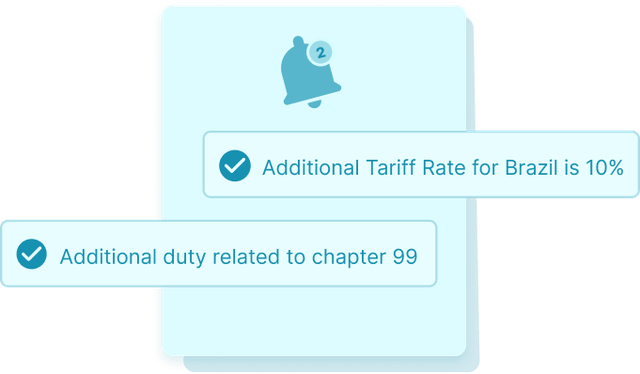
Import Requirements
Solder paste
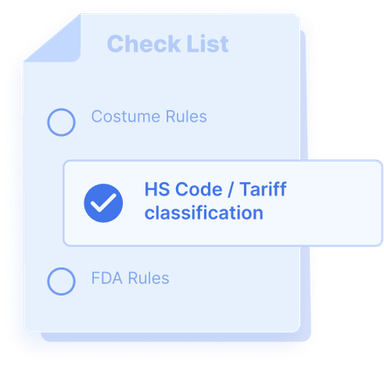

Import Data
Solder paste


AI Insight
Plastic Bucket under HS Code 3924-24 shows growing demand in 12 emerging markets with favorable duty rates and limited competition. Our AI has identified key compliance requirements, optimal sourcing regions, and upcoming tariff changes that could impact your margins. See the complete analysis to discover specific opportunities.










Market
Opportunities
Top 5 Partners by Quantity
 United States
 Australia
 India
India Canada


Solder paste HS Code description
Solder paste harmonized system code
Product Overview Solder Paste, classified under the Harmonized System (HS) Code 3810, is a fusible alloy utilized to create a permanent bond between metal surfaces. In its composition, it features a blend of powdered metal solder particles suspended in a flux medium, which aids in the soldering process by cleaning and preventing oxidation. The product has two primary subcategories under HS code 3810: preparations for soldering (3810.10) and other (3810.90). The former is designed for specialized electronic applications, while the latter category is more general-purpose. Solder paste is primarily used in the electronics industry for attaching surface mount components to printed circuit boards (PCBs). Its market positioning is based on its ability to provide strong, reliable connections in electronic devices, thus ensuring their functionality and durability. HS Code Classification & Trade Specifications The full six-digit HS Code for Solder Paste is 3810.10 for preparations for soldering and 3810.90 for other preparations. This classification is derived from Chapter 38 (Miscellaneous Chemical Products), Heading 10 (Fluxes and other auxiliary preparations for soldering, brazing or welding; preparations of a kind used as cores or coatings for welding electrodes or rods). The specific subheading further distinguishes the product based on its intended use. When it comes to trade considerations, solder paste is typically packaged in syringes, jars, or cartridges for easy application and to maintain product integrity during transit. It is also stored and transported at low temperatures to prevent premature activation. Quality standards for Solder Paste are stringent, with a focus on metal purity, particle size, and flux consistency. These specifications are crucial to meet the exacting requirements of the electronics manufacturing industry and to comply with World Trade Organization and customs documentation standards.
Solder paste Chapter Note
1.- This Chapter does not cover : (a) Separate chemically defined elements or compounds with the exception of the following : (1) Artificial graphite (heading 38.01); (2) Insecticides, rodenticides, fungicides, herbicides, anti-sprouting products and plant-growth regulators, disinfectants and similar products, put up as described in heading 38.08; (3) Products put up as charges for fire-extinguishers or put up in fire-extinguishing grenades (heading 38.13); (4) Certified reference materials specified in Note 2 below; (5) Products specified in Note 3 (a) or 3 (c) below; (b) Mixtures of chemicals with foodstuffs or other substances with nutritive value, of a kind used in the preparation of human foodstuffs (generally heading 21.06); (c) Products of heading 24.04; (d) Slag, ash and residues (including sludges, other than sewage sludge), containing metals, arsenic or their mixtures and meeting the requirements of Note 3 (a) or 3 (b) to Chapter 26 (heading 26.20); (e) Medicaments (heading 30.03 or 30.04); or (f) Spent catalysts of a kind used for the extraction of base metals or for the manufacture of chemical compounds of base metals (heading 26.20), spent catalysts of a kind used principally for the recovery of precious metal (heading 71.12) or catalysts consisting of metals or metal alloys in the form of, for example, finely divided powder or woven gauze (Section XIV or XV). 2.- (A) For the purpose of heading 38.22, the expression “certified reference materials” means reference materials which are accompanied by a certificate which indicates the values of the certified properties, the methods used to determine these values and the degree of certainty associated with each value and which are suitable for analytical, calibrating or referencing purposes. (B) With the exception of the products of Chapter 28 or 29, for the classification of certified reference materials, heading 38.22 shall take precedence over any other heading in the Nomenclature. 3.- Heading 38.24 includes the following goods which are not to be classified in any other heading of the Nomenclature : (a) Cultured crystals (other than optical elements) weighing not less than 2.5 g each, of magnesium oxide or of the halides of the alkali or alkaline-earth metals; (b) Fusel oil; Dippel's oil; (c) Ink removers put up in packings for retail sale; (d) Stencil correctors, other correcting fluids and correction tapes (other than those of heading 96.12), put up in packings for retail sale; and (e) Ceramic firing testers, fusible (for example, Seger cones). 4.- Throughout the Nomenclature, “municipal waste” means waste of a kind collected from households, hotels, restaurants, hospitals, shops, offices, etc., road and pavement sweepings, as well as construction and demolition waste. Municipal waste generally contains a large variety of materials such as plastics, rubber, wood, paper, textiles, glass, metals, food materials, broken furniture and other damaged or discarded articles. The term “municipal waste”, however, does not cover : (a) Individual materials or articles segregated from the waste, for example wastes of plastics, rubber, wood, paper, textiles, glass or metals, electrical and electronic waste and scrap (including spent batteries) which fall in their appropriate headings of the Nomenclature; (b) Industrial waste;(c) Waste pharmaceuticals, as defined in Note 4 (k) to Chapter 30; or (d) Clinical waste, as defined in Note 6 (a) below. 5.- For the purposes of heading 38.25, “sewage sludge” means sludge arising from urban effluent treatment plant and includes pre-treatment waste, scourings and unstabilised sludge. Stabilised sludge when suitable for use as fertiliser is excluded (Chapter 31). 6.- For the purposes of heading 38.25, the expression “other wastes” applies to : (a) Clinical waste, that is, contaminated waste arising from medical research, diagnosis, treatment or other medical, surgical, dental or veterinary procedures, which often contain pathogens and pharmaceutical substances and require special disposal procedures (for example, soiled dressings, used gloves and used syringes); (b) Waste organic solvents; (c) Wastes of metal pickling liquors, hydraulic fluids, brake fluids and anti-freezing fluids; and (d) Other wastes from chemical or allied industries. The expression “other wastes” does not, however, cover wastes which contain mainly petroleum oils or oils obtained from bituminous minerals (heading 27.10). 7.- For the purposes of heading 38.26, the term “biodiesel” means mono-alkyl esters of fatty acids of a kind used as a fuel, derived from animal, vegetable or microbial fats and oils whether or not used.