

Spc flooring Hs Code
HS Code: 3918.10
spc flooring classified under HS code 3918.10
Descriptions like this can miss product-specific details. Confirm your code with Deepbeez's HS code finder.
Chapter
39Plastics and articles thereof
Heading
3918Floor coverings of plastics, whether or not self-adhesive, in rolls or in the form of tiles , Wall or ceiling coverings of plastics, as defined in note 9 to this chapter
Sub Heading
3918.10Of polymers of vinyl chloride

DeepBeez

Founded in 2025
Tariff Tracker
Spc flooring
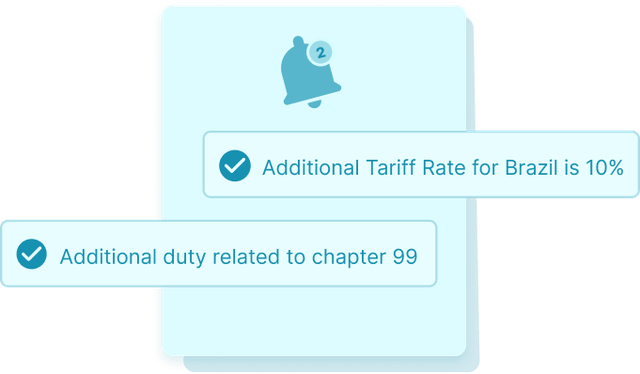
Import Requirements
Spc flooring
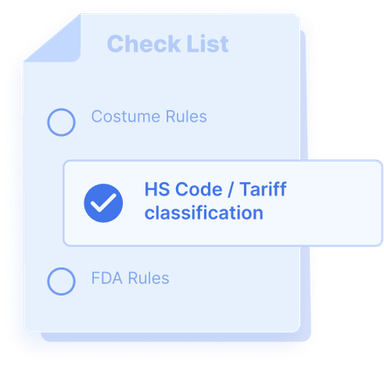
Import Data
Spc flooring


AI Insight
Plastic Bucket under HS Code 3924-24 shows growing demand in 12 emerging markets with favorable duty rates and limited competition. Our AI has identified key compliance requirements, optimal sourcing regions, and upcoming tariff changes that could impact your margins. See the complete analysis to discover specific opportunities.










Market
Opportunities
Top 5 Partners by Quantity
 United States
 Australia
 India
India Canada


Spc flooring HS Code description
Spc flooring harmonized system code
Product Overview SPC (Stone Plastic Composite) flooring, classified under HS Code 391810, is a rigid vinyl flooring product composed primarily of limestone powder, polyvinyl chloride (PVC), and stabilizers, offering enhanced durability and dimensional stability. This flooring solution typically features a multi-layered construction—including a wear-resistant top coat, a high-definition printed vinyl layer, a rigid SPC core, and an attached backing layer—resulting in thicknesses ranging from 3.0 mm to 7.0 mm with densities generally between 1.4 to 1.6 g/cm³. SPC flooring demonstrates superior resistance to moisture, impact, and temperature fluctuations, distinguishing it from traditional vinyl or laminate flooring. Under HS Code 391810, which covers “Floor coverings of plastics, whether or not self-adhesive,” SPC flooring is further subcategorized based on surface treatment (e.g., embossed, smooth), backing type (foam, cork, or rigid), and installation method (click-lock or glue-down). Its primary commercial applications include high-traffic environments such as food service establishments, retail outlets, and processing industries where hygiene, durability, and ease of maintenance are critical. SPC flooring’s value proposition lies in its balance of robustness, aesthetic versatility, and cost-efficiency, positioning it competitively within the international plastic flooring market. HS Code Classification & Trade Specifications The full HS Code for SPC flooring is 391810, which breaks down as follows: Chapter 39 (“Plastics and articles thereof”), Heading 18 (“Floor coverings of plastics”), and Subheading 10 (“Floor coverings consisting of plastics”). This classification is based on the product’s primary composition of plastic materials and its intended use as a floor covering, consistent with the Harmonized System nomenclature guidelines. SPC flooring’s rigid core and composite construction distinguish it from flexible vinyl flooring, justifying its placement under 391810. For international trade, SPC flooring is typically packaged in moisture-resistant, shrink-wrapped cartons with protective corner guards to prevent damage during transit. Preservation methods emphasize maintaining controlled humidity and temperature conditions to prevent warping or delamination. Shipping generally adheres to palletized container loads conforming to ISO standards, facilitating efficient customs inspections and cargo handling. Quality standards for SPC flooring align with ISO 10582 (resilient floor coverings) and ASTM F3261 (SPC flooring specifications), ensuring compliance with durability, slip resistance, and chemical resistance requirements. These precise classification and trade details support accurate customs declaration, tariff application, and adherence to WTO trade facilitation protocols.
Spc flooring Chapter Note
1.- Throughout the Nomenclature the expression “plastics” means those materials of headings 39.01 to 39.14 which are or have been capable, either at the moment of polymerisation or at some subsequent stage, of being formed under external influence (usually heat and pressure, if necessary with a solvent or plasticiser) by moulding, casting, extruding, rolling or other process into shapes which are retained on the removal of the external influence. Throughout the Nomenclature any reference to “plastics” also includes vulcanised fibre. The expression, however, does not apply to materials regarded as textile materials of Section XI. 2.- This Chapter does not cover : (a) Lubricating preparations of heading 27.10 or 34.03; (b) Waxes of heading 27.12 or 34.04; (c) Separate chemically defined organic compounds (Chapter 29); (d) Heparin or its salts (heading 30.01); (e) Solutions (other than collodions) consisting of any of the products specified in headings 39.01 to 39.13 in volatile organic solvents when the weight of the solvent exceeds 50 % of the weight of the solution (heading 32.08); stamping foils of heading 32.12; (f) Organic surface-active agents or preparations of heading 34.02; (g) Run gums or ester gums (heading 38.06); (h) Prepared additives for mineral oils (including gasoline) or for other liquids used for the same purposes as mineral oils (heading 38.11); (ij) Prepared hydraulic fluids based on polyglycols, silicones or other polymers of Chapter 39 (heading 38.19); (k) Diagnostic or laboratory reagents on a backing of plastics (heading 38.22); (l) Synthetic rubber, as defined for the purposes of Chapter 40, or articles thereof; (m) Saddlery or harness (heading 42.01) or trunks, suitcases, handbags or other containers of heading 42.02; (n) Plaits, wickerwork or other articles of Chapter 46;(o) Wall coverings of heading 48.14; (p) Goods of Section XI (textiles and textile articles); (q) Articles of Section XII (for example, footwear, headgear, umbrellas, sun umbrellas, walking-sticks, whips, riding-crops or parts thereof); (r) Imitation jewellery of heading 71.17; (s) Articles of Section XVI (machines and mechanical or electrical appliances); (t) Parts of aircraft or vehicles of Section XVII; (u) Articles of Chapter 90 (for example, optical elements, spectacle frames, drawing instruments); (v) Articles of Chapter 91 (for example, clock or watch cases); (w) Articles of Chapter 92 (for example, musical instruments or parts thereof); (x) Articles of Chapter 94 (for example, furniture, luminaires and lighting fittings, illuminated signs, prefabricated buildings); (y) Articles of Chapter 95 (for example, toys, games, sports requisites); or (z) Articles of Chapter 96 (for example, brushes, buttons, slide fasteners, combs, mouthpieces or stems for smoking pipes, cigarette-holders or the like, parts of vacuum flasks or the like, pens, propelling pencils, and monopods, bipods, tripods and similar articles). 3.- Headings 39.01 to 39.11 apply only to goods of a kind produced by chemical synthesis, falling in the following categories : (a) Liquid synthetic polyolefins of which less than 60 % by volume distils at 300 C, after conversion to 1,013 millibars when a reduced-pressure distillation method is used (headings 39.01 and 39.02); (b) Resins, not highly polymerised, of the coumarone-indene type (heading 39.11); (c) Other synthetic polymers with an average of at least 5 monomer units; (d) Silicones (heading 39.10); (e) Resols (heading 39.09) and other prepolymers. 4.- The expression “copolymers” covers all polymers in which no single monomer unit contributes 95 % or more by weight to the total polymer content. For the purposes of this Chapter, except where the context otherwise requires, copolymers (including copolycondensates, co-polyaddition products, block copolymers and graft copolymers) and polymer blends are to be classified in the heading covering polymers of that comonomer unit which predominates by weight over every other single comonomer unit. For the purposes of this Note, constituent comonomer units of polymers falling in the same heading shall be taken together. If no single comonomer unit predominates, copolymers or polymer blends, as the case may be, are to be classified in the heading which occurs last in numerical order among those which equally merit consideration. 5.- Chemically modified polymers, that is those in which only appendages to the main polymer chain have been changed by chemical reaction, are to be classified in the heading appropriate to the unmodified polymer. This provision does not apply to graft copolymers. 6.- In headings 39.01 to 39.14, the expression “primary forms” applies only to the following forms : (a) Liquids and pastes, including dispersions (emulsions and suspensions) and solutions; (b) Blocks of irregular shape, lumps, powders (including moulding powders), granules, flakes and similar bulk forms. 7.- Heading 39.15 does not apply to waste, parings and scrap of a single thermoplastic material, transformed into primary forms (headings 39.01 to 39.14). 8.- For the purposes of heading 39.17, the expression “tubes, pipes and hoses” means hollow products, whether semi-manufactures or finished products, of a kind generally used for conveying, conducting or distributing gases or liquids (for example, ribbed garden hose, perforated tubes). This expression also includes sausage casings and other lay-flat tubing. However, except for the last-mentioned, those having an internal cross-section other than round, oval, rectangular (in which the length does not exceed 1.5 times the width) or in the shape of a regular polygon are not to be regarded as tubes, pipes and hoses but as profile shapes.9.-For the purposes of heading 39.18, the expression “wall or ceiling coverings of plastics” applies to products in rolls, of a width not less than 45 cm, suitable for wall or ceiling decoration, consisting of plastics fixed permanently on a backing of any material other than paper, the layer of plastics (on the face side) being grained, embossed, coloured, design-printed or otherwise decorated. 10.- In headings 39.20 and 39.21, the expression “plates, sheets, film, foil and strip” applies only to plates, sheets, film, foil and strip (other than those of Chapter 54) and to blocks of regular geometric shape, whether or not printed or otherwise surface-worked, uncut or cut into rectangles (including squares) but not further worked (even if when so cut they become articles ready for use). 11.- Heading 39.25 applies only to the following articles, not being products covered by any of the earlier headings of sub-Chapter II : (a) Reservoirs, tanks (including septic tanks), vats and similar containers, of a capacity exceeding 300 l; (b) Structural elements used, for example, in floors, walls or partitions, ceilings or roofs; (c) Gutters and fittings therefor; (d) Doors, windows and their frames and thresholds for doors; (e) Balconies, balustrades, fencing, gates and similar barriers; (f) Shutters, blinds (including Venetian blinds) and similar articles and parts and fittings thereof; (g) Large-scale shelving for assembly and permanent installation, for example, in shops, workshops, warehouses; (h) Ornamental architectural features, for example, flutings, cupolas, dovecotes; and (ij) Fittings and mountings intended for permanent installation in or on doors, windows, staircases, walls or other parts of buildings, for example, knobs, handles, hooks, brackets, towel rails, switchplates and other protective plates.