


Steel ball Hs Code
HS Code: 8482.91
steel ball classified under HS code 8482.91
Chapter
84Machinery and mechanical appliances, boilers, nuclear reactors , Parts thereof
Heading
8482Ball or roller bearings, and parts thereof
Sub Heading
8482.91Parts balls, needles and rollers

DeepBeez

Founded in 2025
Tariff Tracker
Steel ball
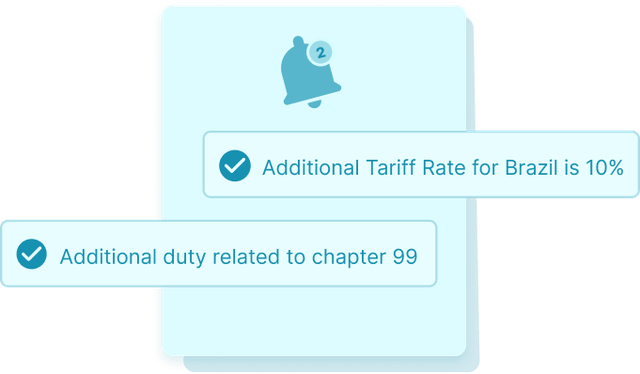
Import Requirements
Steel ball

Import Data
Steel ball


AI Insight
Plastic Bucket under HS Code 3924-24 shows growing demand in 12 emerging markets with favorable duty rates and limited competition. Our AI has identified key compliance requirements, optimal sourcing regions, and upcoming tariff changes that could impact your margins. See the complete analysis to discover specific opportunities.










Market
Opportunities
Top 5 Partners by Quantity
 United States
 Australia
 India
India Canada


Steel ball HS Code description
Steel ball harmonized system code
Product Overview Steel balls classified under HS Code 848291 are precision-manufactured spherical components primarily composed of high-grade carbon or stainless steel. These steel balls exhibit stringent physical specifications, including diameters typically ranging from 1 mm to 100 mm, with surface roughness values maintained below 0.1 micrometers to ensure optimal rolling performance. Manufactured through advanced cold heading and heat treatment processes, they demonstrate superior hardness (often exceeding 60 HRC) and enhanced wear resistance, meeting rigorous industry quality standards such as ISO 3290 and ASTM A295. The HS Code 848291 encompasses subcategories differentiated by steel alloy composition, heat treatment methods, and intended application—covering hardened bearing balls, stainless steel balls, and other specialty steel spheres. Commercially, these steel balls serve critical roles in bearing assemblies, precision instruments, conveyor systems, and various processing equipment within food service, retail packaging machinery, and industrial processing sectors. Their high durability, dimensional accuracy, and corrosion resistance position them as essential components in high-performance mechanical systems, underpinning reliable operations across global supply chains. HS Code Classification & Trade Specifications The HS Code 848291 falls under Chapter 84 (Nuclear reactors, boilers, machinery and mechanical appliances; parts thereof), Heading 8482 (Ball or roller bearings and parts thereof), with Subheading 848291 designating “Steel balls.” This classification reflects the product’s function as a component integral to ball bearings and related assemblies, substantiated by international customs nomenclature standards. Trade compliance necessitates adherence to standardized packaging protocols, often involving moisture-resistant, cushioned containers or sealed steel drums to prevent corrosion during transit. Preservation methods may include application of rust-inhibiting oils or vacuum-sealed packaging to maintain surface integrity. Shipping requirements mandate clear labeling in accordance with WTO agreements and INCOTERMS, facilitating smooth customs clearance. Quality standards are verified through certifications like ISO 9001 and adherence to ASTM or JIS testing procedures, ensuring dimensional tolerances within ±0.01 mm and hardness conformity. This precise classification and comprehensive trade specification framework support accurate customs declaration, tariff determination, and regulatory compliance essential for import/export operations and international supply chain transparency.
Steel ball Chapter Note
1.- This Chapter does not cover : (a) Millstones, grindstones or other articles of Chapter 68; (b) Machinery or appliances (for example, pumps) of ceramic material and ceramic parts of machinery or appliances of any material (Chapter 69); (c) Laboratory glassware (heading 70.17); machinery, appliances or other articles for technical uses or parts thereof, of glass (heading 70.19 or 70.20); (d) Articles of heading 73.21 or 73.22 or similar articles of other base metals (Chapters 74 to 76 or 78 to 81); (e) Vacuum cleaners of heading 85.08; (f) Electro-mechanical domestic appliances of heading 85.09; digital cameras of heading 85.25; (g) Radiators for the articles of Section XVII; or (h) Hand-operated mechanical floor sweepers, not motorised (heading 96.03). 2.- Subject to the operation of Note 3 to Section XVI and subject to Note 11 to this Chapter, a machine or appliance which answers to a description in one or more of the headings 84.01 to 84.24, or heading 84.86 and at the same time to a description in one or more of the headings 84.25 to 84.80 is to be classified under the appropriate heading of the former group or under heading 84.86, as the case may be, and not the latter group. (A) Heading 84.19 does not, however, cover : (i) Germination plant, incubators or brooders (heading 84.36); (ii) Grain dampening machines (heading 84.37); (iii) Diffusing apparatus for sugar juice extraction (heading 84.38);(iv) Machinery for the heat-treatment of textile yarns, fabrics or made up textile articles (heading 84.51); or (v) Machinery, plant or laboratory equipment designed for a mechanical operation, in which a change of temperature, even if necessary, is subsidiary. (B) Heading 84.22 does not cover : (i) Sewing machines for closing bags or similar containers (heading 84.52); or (ii) Office machinery of heading 84.72. (C) Heading 84.24 does not cover : (i) Ink-jet printing machines (heading 84.43); or (ii) Water-jet cutting machines (heading 84.56). 3.- A machine-tool for working any material which answers to a description in heading 84.56 and at the same time to a description in heading 84.57, 84.58, 84.59, 84.60, 84.61, 84.64 or 84.65 is to be classified in heading 84.56. 4.- Heading 84.57 applies only to machine-tools for working metal, other than lathes (including turning centres), which can carry out different types of machining operations either : (a) by automatic tool change from a magazine or the like in conformity with a machining programme (machining centres), (b) by the automatic use, simultaneously or sequentially, of different unit heads working on a fixed position workpiece (unit construction machines, single station), or (c) by the automatic transfer of the workpiece to different unit heads (multi-station transfer machines). 5.- For the purposes of heading 84.62, a “slitting line” for flat products is a processing line composed of an uncoiler, a coil flattener, a slitter and a recoiler. A “cut-to-length line” for flat products is a processing line composed of an uncoiler, a coil flattener, and a shear. 6.- (A) For the purposes of heading 84.71, the expression “automatic data processing machines” means machines capable of : (i) Storing the processing program or programs and at least the data immediately necessary for the execution of the program; (ii) Being freely programmed in accordance with the requirements of the user; (iii) Performing arithmetical computations specified by the user; and (iv) Executing, without human intervention, a processing program which requires them to modify their execution, by logical decision during the processing run. (B) Automatic data processing machines may be in the form of systems consisting of a variable number of separate units. (C) Subject to paragraphs (D) and (E) below, a unit is to be regarded as being part of an automatic data processing system if it meets all of the following conditions : (i) It is of a kind solely or principally used in an automatic data processing system; (ii) It is connectable to the central processing unit either directly or through one or more other units; and (iii) It is able to accept or deliver data in a form (codes or signals) which can be used by the system. Separately presented units of an automatic data processing machine are to be classified in heading 84.71. However, keyboards, X-Y co-ordinate input devices and disk storage units which satisfy the conditions of paragraphs (C) (ii) and (C) (iii) above, are in all cases to be classified as units of heading 84.71. (D) Heading 84.71 does not cover the following when presented separately, even if they meet all of the conditions set forth in Note 6 (C) above : (i) Printers, copying machines, facsimile machines, whether or not combined; (ii) Apparatus for the transmission or reception of voice, images or other data, including apparatus for communication in a wired or wireless network (such as a local or wide area network); (iii) Loudspeakers and microphones;(iv) Television cameras, digital cameras and video camera recorders; (v) Monitors and projectors, not incorporating television reception apparatus. (E) Machines incorporating or working in conjunction with an automatic data processing machine and performing a specific function other than data processing are to be classified in the headings appropriate to their respective functions or, failing that, in residual headings. 7.- Heading 84.82 applies, inter alia, to polished steel balls, the maximum and minimum diameters of which do not differ from the nominal diameter by more than 1 % or by more than 0.05 mm, whichever is less. Other steel balls are to be classified in heading 73.26. 8.- A machine which is used for more than one purpose is, for the purposes of classification, to be treated as if its principal purpose were its sole purpose. Subject to Note 2 to this Chapter and Note 3 to Section XVI, a machine the principal purpose of which is not described in any heading or for which no one purpose is the principal purpose is, unless the context otherwise requires, to be classified in heading 84.79. Heading 84.79 also covers machines for making rope or cable (for example, stranding, twisting or cabling machines) from metal wire, textile yarn or any other material or from a combination of such materials. 9.- For the purposes of heading 84.70, the term “pocket-size” applies only to machines the dimensions of which do not exceed 170 mm x 100 mm x 45 mm. 10.- For the purposes of heading 84.85, the expression “additive manufacturing” (also referred to as 3D printing) means the formation of physical objects, based on a digital model, by the successive addition and layering, and consolidation and solidification, of material (for example, metal, plastics or ceramics). Subject to Note 1 to Section XVI and Note 1 to Chapter 84, machines answering to the description in heading 84.85 are to be classified in that heading and in no other heading of the Nomenclature. 11.- (A) Notes 12 (a) and 12 (b) to Chapter 85 also apply with respect to the expressions “semiconductor devices” and “electronic integrated circuits”, respectively, as used in this Note and in heading 84.86. However, for the purposes of this Note and of heading 84.86, the expression “semiconductor devices” also covers photosensitive semiconductor devices and light-emitting diodes (LED). (B) For the purposes of this Note and of heading 84.86, the expression “manufacture of flat panel displays” covers the fabrication of substrates into a flat panel. It does not cover the manufacture of glass or the assembly of printed circuit boards or other electronic components onto the flat panel. The expression “flat panel display” does not cover cathode-ray tube technology. (C) Heading 84.86 also includes machines and apparatus solely or principally of a kind used for : (i) the manufacture or repair of masks and reticles; (ii) assembling semiconductor devices or electronic integrated circuits; (iii) lifting, handling, loading or unloading of boules, wafers, semiconductor devices, electronic integrated circuits and flat panel displays. (D) Subject to Note 1 to Section XVI and Note 1 to Chapter 84, machines and apparatus answering to the description in heading 84.86 are to be classified in that heading and in no other heading of the Nomenclature.