


Sweets & confectionery|HS Code
Sweets & Confectionery belong to HS heading 1704, but the exact 6-digit code depends on your product specifications. Let our AI tool analyze your product details and provide the precise HS code and tariff information.

DeepBeez

Founded in 2025
Tariff Tracker
Sweets & confectionery
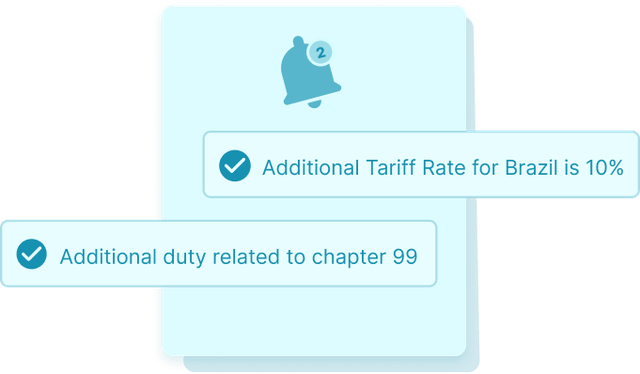
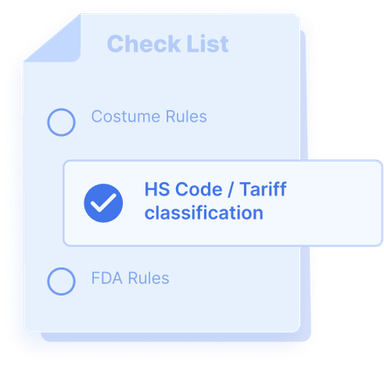
Import Requirements
Sweets & confectionery

Import Data
Sweets & confectionery


AI Insight
Plastic Bucket under HS Code 3924-24 shows growing demand in 12 emerging markets with favorable duty rates and limited competition. Our AI has identified key compliance requirements, optimal sourcing regions, and upcoming tariff changes that could impact your margins. See the complete analysis to discover specific opportunities.










Market
Opportunities
Top 5 Partners by Quantity
 United States
 Australia
 India
India Canada


Sweets & confectionery HS Code description
Sweets & confectionery harmonized system code
Product Overview The product "Sweets & Confectionery" classified under HS Code 1704 encompasses a broad range of sugar-based treats, including candies, chocolates, and other sweetened food items. A key characteristic of these products is that they are primarily composed of sugar or other sweeteners, often combined with flavorings, colorings, and occasionally, fillers like nuts or dried fruits. Processing levels can vary significantly, ranging from simple boiled sweets to intricately moulded chocolates. The HS Code 1704 is further divided into subcategories, such as 1704.10 for Chewing Gum and 1704.90 for other confectionery items like toffees, caramels, and nougats. These products are commonly used in the food service industry, retail businesses, and food processing industries for direct consumption, gifting, or as ingredients in a wide variety of desserts and baked goods. The competitive advantage of sweets and confectioneries lies in their universal appeal, versatility, and the potential for high-profit margins due to their low-cost ingredients and long shelf-life. HS Code Classification & Trade Specifications The complete HS Code for Sweets & Confectionery is structured as follows: Chapter 17 (Sugars and Sugar Confectionery), Heading 04 (Sugar Confectionery), with further subheadings denoting specific types of confectionery. The product falls under this code due to its primary composition of sugar and other sweeteners. When considering trade, these products are often packaged in tins, plastic wrappers, or boxes to ensure freshness and prevent damage during transit. Preservation methods mainly include the use of preservatives, vacuum sealing, and temperature control. Shipping requirements typically involve dry storage and protection from extreme temperatures to maintain product integrity. Quality standards for Sweets & Confectionery generally include parameters such as sugar content, moisture content, and the absence of contaminants, adhering to both local and international food safety regulations. These specifications are crucial for customs and trade documentation, ensuring accurate product classification and compliance with international trade regulations.
Sweets & confectionery Chapter Note
1.- This Chapter does not cover : (a) Sugar confectionery containing cocoa (heading 18.06); (b) Chemically pure sugars (other than sucrose, lactose, maltose, glucose and fructose) or other products of heading 29.40; or (c) Medicaments or other products of Chapter 30. Subheading Notes. 1.- For the purposes of subheadings 1701.12, 1701.13 and 1701.14, “raw sugar” means sugar whose content of sucrose by weight, in the dry state, corresponds to a polarimeter reading of less than 99.5. 2.- Subheading 1701.13 covers only cane sugar obtained without centrifugation, whose content of sucrose by weight, in the dry state, corresponds to a polarimeter reading of 69° or more but less than 93°. The product contains only natural anhedral microcrystals, of irregular shape, not visible to the naked eye, which are surrounded by residues of molasses and other constituents of sugar cane.