
Tempered glass|HS Code
Tempered Glass belong to HS heading 7007, but the exact 6-digit code depends on your product specifications. Let our AI tool analyze your product details and provide the precise HS code and tariff information.
Tempered Glass HS Codes
Toughened (tempered) safety glass Of size and shape suitable for incorporation in vehicles, aircraft, spacecraft or vessels
Toughened (tempered) safety glass Other than Of size and shape suitable for incorporation in vehicles, aircraft, spacecraft or vessels
Laminated safety glass Of size and shape suitable for incorporation in vehicles, aircraft, spacecraft or vessels
Laminated safety glass Other than Of size and shape suitable for incorporation in vehicles, aircraft, spacecraft or vessels

DeepBeez

Founded in 2025
Tariff Tracker
Tempered glass
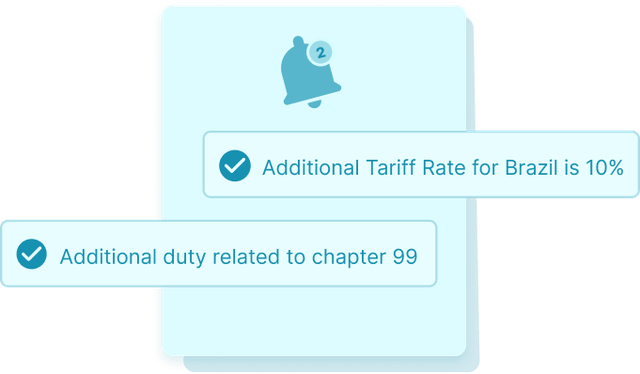
Import Requirements
Tempered glass
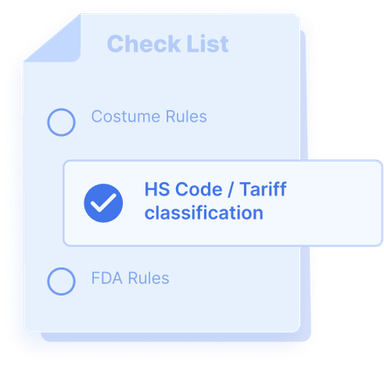
Import Data
Tempered glass


AI Insight
Plastic Bucket under HS Code 3924-24 shows growing demand in 12 emerging markets with favorable duty rates and limited competition. Our AI has identified key compliance requirements, optimal sourcing regions, and upcoming tariff changes that could impact your margins. See the complete analysis to discover specific opportunities.









Market
Opportunities
Top 5 Partners by Quantity
 United States
 Australia
 India
India Canada


Tempered glass HS Code description
Tempered glass harmonized system code
Product Overview Tempered Glass, classified under the Harmonized System (HS) Code 7007, is a type of safety glass that has undergone controlled thermal treatment to increase its strength. This process involves heating the glass to extremely high temperatures and then rapidly cooling it, which results in a glass that is four to five times stronger than regular glass. The key distinguishing characteristic of Tempered Glass is its toughness and resistance to breakage. When it does break, it shatters into small, granular pieces, reducing the risk of injury. HS Code 7007 includes both bent and flat tempered glass. The commercial use of this product is vast, ranging from automotive windows, doors and partitions, shower doors, architectural glass doors and tables, refrigerator trays, mobile screen protectors, as a component of bulletproof glass, and various types of cookware. Its durability and safety features position it as a high-value product in sectors requiring robust, long-lasting materials. HS Code Classification & Trade Specifications Tempered Glass is classified under the full 6-digit HS Code 7007.21 and 7007.29. The breakdown of this code is as follows: Chapter 70 (Glass and glassware), Heading 07 (Safety glass, consisting of toughened (tempered) or laminated glass), and Subheading 21 or 29, which distinguishes between bent tempered glass and all other types. This product is classified under this specific code due to its distinct processing and safety features that differentiate it from other types of glass. When it comes to trade considerations, Tempered Glass should be packaged securely to prevent damage during transit. It requires no special preservation methods, with shipping requirements varying depending on the product's size and dimensions. The glass should meet international quality standards for strength and safety, including ISO 614, EN 12150, and ANSI Z97.1. These standards specify the necessary hardness, fragmentation, and the mechanical and thermal characteristics of tempered soda lime silica glass. The description provided should meet the requirements for customs documentation and international trade classification.
Tempered glass Chapter Note
1.- This Chapter does not cover : (a) Goods of heading 32.07 (for example, vitrifiable enamels and glazes, glass frit, other glass in the form of powder, granules or flakes); (b) Articles of Chapter 71 (for example, imitation jewellery); (c) Optical fibre cables of heading 85.44, electrical insulators (heading 85.46) or fittings of insulating material of heading 85.47; (d) Front windscreens (windshields), rear windows and other windows, framed, for vehicles of Chapters 86 to 88; (e) Front windscreens (windshields), rear windows and other windows, whether or not framed, incorporating heating devices or other electrical or electronic devices, for vehicles of Chapters 86 to 88; (f) Optical fibres, optically worked optical elements, hypodermic syringes, artificial eyes, thermometers, barometers, hydrometers or other articles of Chapter 90; (g) Luminaires and lighting fittings, illuminated signs, illuminated name-plates or the like, having a permanently fixed light source, or parts thereof of heading 94.05; (h) Toys, games, sports requisites, Christmas tree ornaments or other articles of Chapter 95 (excluding glass eyes without mechanisms for dolls or for other articles of Chapter 95); or (ij) Buttons, fitted vacuum flasks, scent or similar sprays or other articles of Chapter 96. 2.- For the purposes of headings 70.03, 70.04 and 70.05 : (a) glass is not regarded as “worked” by reason of any process it has undergone before annealing; (b) cutting to shape does not affect the classification of glass in sheets; (c) the expression “absorbent, reflecting or non-reflecting layer” means a microscopically thin coating of metal or of a chemical compound (for example, metal oxide) which absorbs, for example, infrared light or improves the reflecting qualities of the glass while still allowing it to retain a degree of transparency or translucency; or which prevents light from being reflected on the surface of the glass. 3.- The products referred to in heading 70.06 remain classified in that heading whether or not they have the character of articles. 4.- For the purposes of heading 70.19, the expression “glass wool” means : (a) Mineral wools with a silica (SiO2) content not less than 60 % by weight; (b) Mineral wools with a silica (SiO2) content less than 60 % but with an alkaline oxide (K2O or Na2O) content exceeding 5 % by weight or a boric oxide (B2O3) content exceeding 2 % by weight. Mineral wools which do not comply with the above specifications fall in heading 68.06. 5.- Throughout the Nomenclature, the expression “glass” includes fused quartz and other fused silica.