


Wooden bowl Hs Code
HS Code: 4419.90
wooden bowl classified under HS code 4419.90
Chapter
44Wood and articles of wood , Wood charcoal
Heading
4419Tableware and kitchenware, of wood
Sub Heading
4419.90Other than of bamboo and of tropical wood

DeepBeez

Founded in 2025
Tariff Tracker
Wooden bowl
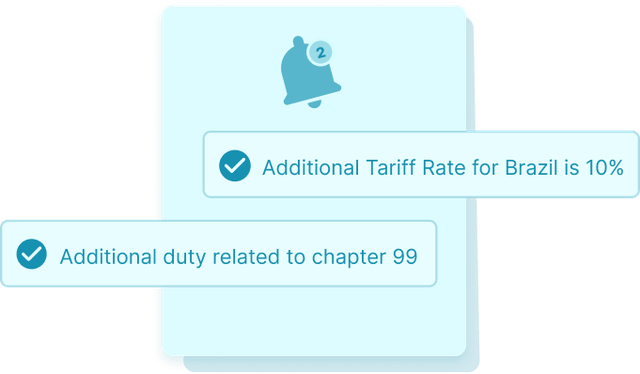
Import Requirements
Wooden bowl

Import Data
Wooden bowl


AI Insight
Plastic Bucket under HS Code 3924-24 shows growing demand in 12 emerging markets with favorable duty rates and limited competition. Our AI has identified key compliance requirements, optimal sourcing regions, and upcoming tariff changes that could impact your margins. See the complete analysis to discover specific opportunities.










Market
Opportunities
Top 5 Partners by Quantity
 United States
 Australia
 India
India Canada


Wooden bowl HS Code description
Wooden bowl harmonized system code
Product Overview The wooden bowl classified under HS Code 441990 refers to artisanal or industrially manufactured bowls primarily composed of wood, excluding those made from bamboo or rattan. These products are typically crafted through precision machining, lathe turning, or hand-finishing techniques, resulting in smooth, durable vessels with diameters ranging from 10 cm to 35 cm and wall thicknesses generally between 3 mm and 8 mm. The wood types commonly used include hardwoods such as maple, oak, and teak, selected for their density, resistance to moisture, and food-safe properties. Under HS Code 441990, these wooden bowls are categorized within the broader classification of “Wooden tableware and kitchenware,” with subcategories distinguishing bowls by their intended use and finish—ranging from untreated raw wood to varnished or lacquered surfaces. Commercially, these wooden bowls serve critical roles in food service establishments for presentation and portioning, retail environments as artisanal kitchenware, and food processing sectors requiring natural, biodegradable serving containers. Their value proposition lies in sustainability, natural aesthetic appeal, and compliance with food safety standards, providing competitive advantages over synthetic alternatives in regulated international markets. HS Code Classification & Trade Specifications The HS Code 441990 falls within Chapter 44, titled “Wood and articles of wood; wood charcoal,” specifically under Heading 4419, which covers “Tableware and kitchenware, of wood.” The full 6-digit code 441990 specifically identifies “Other tableware and kitchenware of wood,” excluding those separately classified under other subheadings such as wooden utensils or kitchenware of bamboo. The classification rationale is based on the product’s primary material composition (wood), functional design (bowl shape for serving or food preparation), and exclusion criteria defined by the Harmonized System nomenclature. Trade considerations typically involve packaging in moisture-resistant, ventilated corrugated fiberboard boxes with internal protective padding to prevent deformation and surface damage during maritime or air freight. Preservation methods often include kiln drying to a moisture content below 12% to inhibit fungal growth and dimensional instability. Compliance with international quality standards such as ISO 22000 for food safety management and adherence to WTO Agreement on Customs Valuation protocols is critical. Additionally, wooden bowls must meet phytosanitary regulations to prevent pest infestation, with accompanying treatment certificates as required by importing countries. This classification ensures uniformity in tariff application, facilitates customs clearance, and supports accurate trade statistics reporting.
Wooden bowl Chapter Note
1.- This Chapter does not cover : (a) Wood, in chips, in shavings, crushed, ground or powdered, of a kind used primarily in perfumery, in pharmacy, or for insecticidal, fungicidal or similar purposes (heading 12.11); (b) Bamboos or other materials of a woody nature of a kind used primarily for plaiting, in the rough, whether or not split, sawn lengthwise or cut to length (heading 14.01); (c) Wood, in chips, in shavings, ground or powdered, of a kind used primarily in dyeing or in tanning (heading 14.04); (d) Activated charcoal (heading 38.02); (e) Articles of heading 42.02; (f) Goods of Chapter 46; (g) Footwear or parts thereof of Chapter 64; (h) Goods of Chapter 66 (for example, umbrellas and walking-sticks and parts thereof); (ij) Goods of heading 68.08; (k) Imitation jewellery of heading 71.17; (l) Goods of Section XVI or Section XVII (for example, machine parts, cases, covers, cabinets for machines and apparatus and wheelwrights' wares); (m) Goods of Section XVIII (for example, clock cases and musical instruments and parts thereof); (n) Parts of firearms (heading 93.05); (o) Articles of Chapter 94 (for example, furniture, luminaires and lighting fittings, prefabricated buildings); (p) Articles of Chapter 95 (for example, toys, games, sports requisites); (q) Articles of Chapter 96 (for example, smoking pipes and parts thereof, buttons, pencils, and monopods, bipods, tripods and similar articles) excluding bodies and handles, of wood, for articles of heading 96.03; or (r) Articles of Chapter 97 (for example, works of art). 2.- In this Chapter, the expression “densified wood” means wood which has been subjected to chemical or physical treatment (being, in the case of layers bonded together, treatment in excess of that needed to ensure a good bond), and which has thereby acquired increased density or hardness together with improved mechanical strength or resistance to chemical or electrical agencies. 3.- Headings 44.14 to 44.21 apply to articles of the respective descriptions of particle board or similar board, fibreboard, laminated wood or densified wood as they apply to such articles of wood.4.- Products of heading 44.10, 44.11 or 44.12 may be worked to form the shapes provided for in respect of the goods of heading 44.09, curved, corrugated, perforated, cut or formed to shapes other than square or rectangular or submitted to any other operation provided it does not give them the character of articles of other headings. 5.- Heading 44.17 does not apply to tools in which the blade, working edge, working surface or other working part is formed by any of the materials specified in Note 1 to Chapter 82. 6.- Subject to Note 1 above and except where the context otherwise requires, any reference to “wood” in a heading of this Chapter applies also to bamboos and other materials of a woody nature.