


Wooden display stand Hs Code
HS Code: 9403.60
wooden display stand classified under HS code 9403.60
Descriptions like this can miss product-specific details. Confirm your code with Deepbeez's HS code finder.
Chapter
94Furniture , Bedding, mattresses, mattress supports, cushions and similar stuffed furnishings , Lamps and lighting fittings, n.e.c. , Illuminated signs, illuminated name-plates and the like , Prefabricated buildings
Heading
9403Other furniture and parts thereof
Sub Heading
9403.60Other wooden furniture

DeepBeez

Founded in 2025
Tariff Tracker
Wooden display stand
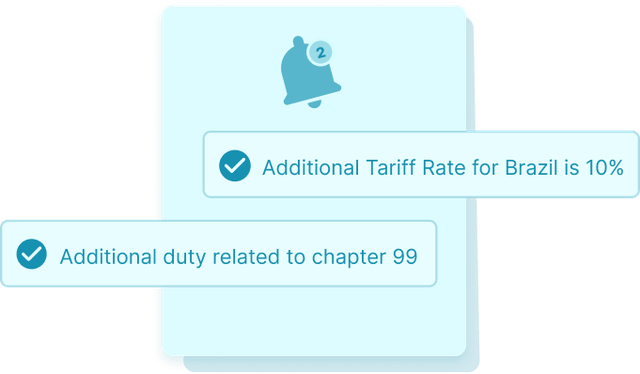
Import Requirements
Wooden display stand

Import Data
Wooden display stand


AI Insight
Plastic Bucket under HS Code 3924-24 shows growing demand in 12 emerging markets with favorable duty rates and limited competition. Our AI has identified key compliance requirements, optimal sourcing regions, and upcoming tariff changes that could impact your margins. See the complete analysis to discover specific opportunities.










Market
Opportunities
Top 5 Partners by Quantity
 United States
 Australia
 India
India Canada


Wooden display stand HS Code description
Wooden display stand harmonized system code
Product Overview A wooden display stand classified under HS Code 940360 is a structural furnishing item designed primarily for the organized presentation and exhibition of products in commercial environments. Constructed from high-grade timber, these stands typically feature precise joinery and surface finishing techniques, such as sanding and varnishing, to enhance durability and aesthetic appeal. Physical dimensions vary according to application but generally conform to standardized sizes facilitating modularity and ease of transport. Within HS Code 940360—which covers “Wooden furniture of a kind used in offices”—subcategories include shelving units, racks, and multi-tiered display stands differentiated by design complexity and load capacity. Commercially, these wooden display stands find extensive application across retail outlets, food service establishments, and processing industries, serving as platforms for product visibility, inventory organization, and customer interaction. Their value proposition lies in the combination of structural integrity, sustainability of materials, and adaptability to diverse merchandising requirements, thus positioning them competitively within the global furniture trade sector. HS Code Classification & Trade Specifications The wooden display stand is classified under HS Code 940360, where "94" designates Chapter 94: Furniture; bedding, mattresses, mattress supports, cushions and similar stuffed furnishings; lamps and lighting fittings, not elsewhere specified or included. The “03” identifies Heading 9403: Other furniture and parts thereof, while “60” specifies Subheading 940360: Wooden furniture of a kind used in offices. This classification is appropriate due to the product’s material composition (wood) and its functional use as office-type furniture or commercial display units. Trade considerations include packaging methods that protect surface finishes, typically involving shrink-wrap and reinforced cardboard cartons, and preservation techniques such as kiln drying to maintain moisture content below 12%, thereby minimizing deformation during transit. Shipping protocols adhere to ISPM 15 standards for wooden packaging to prevent pest infestation. Quality standards conform to ISO 9001 for manufacturing consistency and EN 14749 for furniture safety and durability. This classification and associated trade requirements ensure compliance with WTO regulations and facilitate streamlined customs clearance across international markets.
Wooden display stand Chapter Note
1.- This Chapter does not cover : (a) Pneumatic or water mattresses, pillows or cushions, of Chapter 39, 40 or 63; (b) Mirrors designed for placing on the floor or ground (for example, cheval-glasses (swing-mirrors)) of heading 70.09; (c) Articles of Chapter 71; (d) Parts of general use as defined in Note 2 to Section XV, of base metal (Section XV), or similar goods of plastics (Chapter 39), or safes of heading 83.03; (e) Furniture specially designed as parts of refrigerating or freezing equipment of heading 84.18; furniture specially designed for sewing machines (heading 84.52); (f) Lamps or light sources and parts thereof of Chapter 85; (g) Furniture specially designed as parts of apparatus of heading 85.18 (heading 85.18), of headings 85.19 or 85.21 (heading 85.22) or of headings 85.25 to 85.28 (heading 85.29); (h) Articles of heading 87.14; (ij) Dentists' chairs incorporating dental appliances of heading 90.18 or dentists' spittoons (heading 90.18); (k) Articles of Chapter 91 (for example, clocks and clock cases); (l) Toy furniture or toy luminaires and lighting fittings (heading 95.03), billiard tables or other furniture specially constructed for games (heading 95.04), furniture for conjuring tricks or decorations (other than lighting strings) such as Chinese lanterns (heading 95.05); or (m) Monopods, bipods, tripods and similar articles (heading 96.20). 2.- The articles (other than parts) referred to in headings 94.01 to 94.03 are to be classified in those headings only if they are designed for placing on the floor or ground. The following are, however, to be classified in the above-mentioned headings even if they are designed to be hung, to be fixed to the wall or to stand one on the other : (a) Cupboards, bookcases, other shelved furniture (including single shelves presented with supports for fixing them to the wall) and unit furniture; (b) Seats and beds. 3.- (A) In headings 94.01 to 94.03 references to parts of goods do not include references to sheets or slabs (whether or not cut to shape but not combined with other parts) of glass (including mirrors), marble or other stone or of any other material referred to in Chapter 68 or 69. (B) Goods described in heading 94.04, presented separately, are not to be classified in heading 94.01, 94.02 or 94.03 as parts of goods.4.- For the purposes of heading 94.06, the expression “prefabricated buildings” means buildings which are finished in the factory or put up as elements, presented together, to be assembled on site, such as housing or worksite accommodation, offices, schools, shops, sheds, garages or similar buildings. Prefabricated buildings include "modular building units" of steel, normally presented in the size and shape of a standard shipping container, but substantially or completely pre-fitted internally. Such modular building units are normally designed to be assembled together to form permanent buildings.