

Apple|HTS Code
Apple belongs to HTS Subheading 0808.10, but the exact 8-digit Harmonized Tariff Schedule code depends on your product specifications. Select the correct code from this list based on your product details.
Descriptions like this can miss product-specific details. Confirm your code with Deepbeez's HTS code lookup.
Apples, pears and quinces, fresh Apples
-

DeepBeez

Founded in 2025
Tariff Tracker
Apple
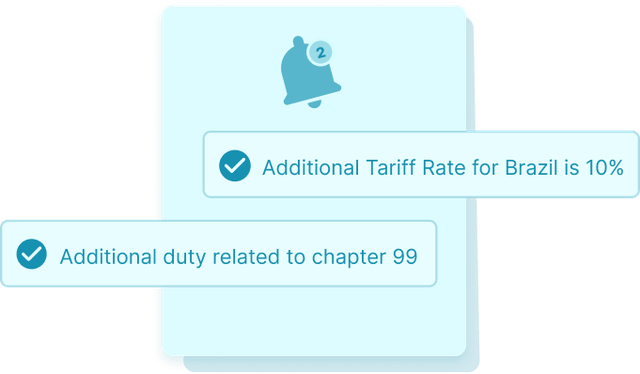
Import Requirements
Apple
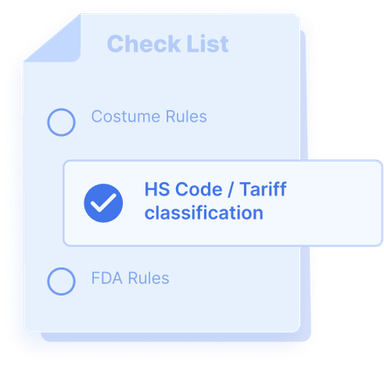

Import Data
Apple


AI Insight
Plastic Bucket under HS Code 3924-24 shows growing demand in 12 emerging markets with favorable duty rates and limited competition. Our AI has identified key compliance requirements, optimal sourcing regions, and upcoming tariff changes that could impact your margins. See the complete analysis to discover specific opportunities.










Market
Opportunities
Top 5 Partners by Quantity
 United States
 Australia
 India
India Canada


Apple HS Code description
Apple harmonized system code
Product Overview Apples classified under HTS 0808.10 are fresh, unprocessed Malus domestica fruit intended for direct consumption or further industrial processing. Product definition: whole, sound, mature apples that have not been cooked, frozen, dried or otherwise preserved. Key characteristics include size (diameter commonly 55–95 mm; commercial counts such as 64/72/88), unit weight (approx. 120–220 g per fruit), soluble solids (Brix 10–14%), flesh firmness (measured by penetrometer, commonly expressed in lbf or newtons), skin and cultivar attributes, and standard hygienic packing conditions. Processing levels covered are fresh/chilled handling, preconditioned (waxed/brushed), minimally processed (pre-washed, bagged, fresh-cut) and prepared/packed for retail. Product classifications within HTS 0808.10 are typically subdivided by intended use and market channel: table/retail apples, apples designated for juice/cider or industrial processing, and consignments subject to nursery or phytosanitary controls. Commercial applications include fresh produce distribution, food-service and retail sales, fresh-cut and prepared fruit processing, cider and juice manufacture, and ingredient supply for baked or prepared foods. HTS Code Classification & Trade Specifications HTS structure: Chapter 08 — Edible fruit and nuts; peel of citrus fruit; melons → Heading 0808 — Apples, pears and quinces → Subheading 0808.10 — Apples, fresh. Classification rationale: whole, fresh, unprocessed Malus domestica fruit fit HS heading 0808.10 under Harmonized System rules and U.S. HTSUS provisions because they are not preserved, processed beyond minimal post-harvest handling, or altered chemically/thermally. Trade considerations cover packaging (ventilated corrugated cartons, bulk bins, retail clamshells, modified-atmosphere retail bags), standard net weights (commonly 10–20 kg cartons), palletization for refrigerated containers, and cold-chain controls: transport temperature 0–4 °C, relative humidity 90–95%, and controlled-atmosphere storage where O2 is reduced to approximately 1–3% with CO2 management. Shipping and compliance requirements include phytosanitary and treatment certificates (cold or fumigation), country-of-origin marking, commercial invoice and packing list, bill of lading, and CBP entry documentation. Quality standards reference U.S. grade criteria (e.g., U.S. No. 1 or equivalent), defect tolerances, size count specifications, and measurable attributes (Brix, firmness) used for inspection and tariff/entry processing.
Apple Chapter Note
1.- This Chapter does not cover inedible nuts or fruits. 2.- Chilled fruits and nuts are to be classified in the same headings as the corresponding fresh fruits and nuts. 3.- Dried fruit or dried nuts of this Chapter may be partially rehydrated, or treated for the following purposes : (a) For additional preservation or stabilisation (for example, by moderate heat treatment, sulphuring, the addition of sorbic acid or potassium sorbate), (b) To improve or maintain their appearance (for example, by the addition of vegetable oil or small quantities of glucose syrup), provided that they retain the character of dried fruit or dried nuts. 4.- Heading 08.12 applies to fruit and nuts which have been treated solely to ensure their provisional preservation during transport or storage prior to use (for example, by sulphur dioxide gas, in brine, in sulphur water or in other preservative solutions), provided they remain unsuitable for immediate consumption in that state.