

Paint|HTS Code
Paint belongs to HTS Subheading 3209.10, but the exact 8-digit Harmonized Tariff Schedule code depends on your product specifications. Select the correct code from this list based on your product details.
Descriptions like this can miss product-specific details. Confirm your code with Deepbeez's HTS code lookup.
Paints and varnishes (including enamels and lacquers) based on synthetic polymers or chemically modified natural polymers, dispersed or dissolved in an aqueous medium Based on acrylic or vinyl polymers
-

DeepBeez

Founded in 2025
Tariff Tracker
Paint
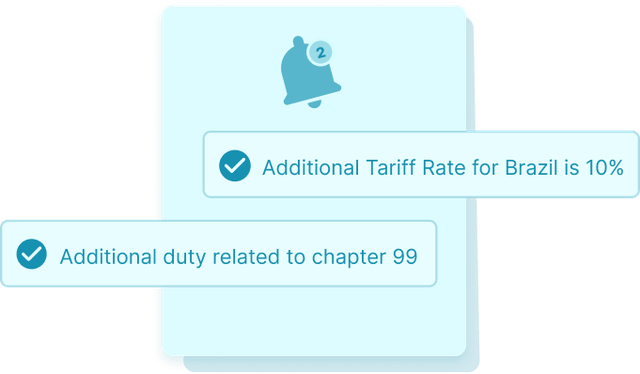
Import Requirements
Paint
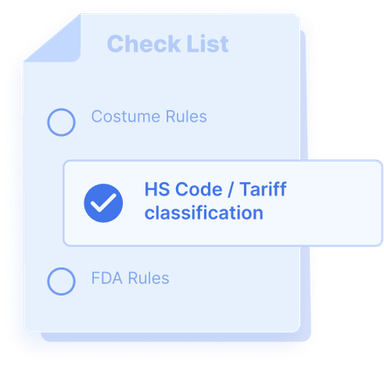
Import Data
Paint


AI Insight
Plastic Bucket under HS Code 3924-24 shows growing demand in 12 emerging markets with favorable duty rates and limited competition. Our AI has identified key compliance requirements, optimal sourcing regions, and upcoming tariff changes that could impact your margins. See the complete analysis to discover specific opportunities.










Market
Opportunities
Top 5 Partners by Quantity
 United States
 Australia
 India
India Canada


Paint HS Code description
Paint harmonized system code
Product Overview Paint classified under HTS 3209.10 is defined as solvent-borne or non‑aqueous paints and enamels based on synthetic polymers or chemically modified natural polymers, formulated for surface finishing, protection and decoration. Key characteristics include solids‑by‑weight typically 20–70%, specific gravity commonly 0.9–1.6 g/cm3, Brookfield viscosities from ~50–2,000 cP depending on grade, and VOC contents that vary by formulation and regulatory regime (commonly 50–450 g/L). Processing levels include ready‑to‑use single‑pack, concentrated paste, and multi‑component (2K) systems requiring on‑site mixing; measurable quality attributes include pigment volume concentration (PVC), film thickness (µm), film‑forming temperature, crosslink density, adhesion and hardness. Product classifications within 3209.10 are typically segmented into alkyd‑based enamels, solventborne acrylic/synthetic paints, high‑solids industrial coatings, metallic/anti‑corrosive formulations and bituminous/aromatic‑modified finishes. Commercial applications cover industrial OEM coating lines, protective and anti‑corrosion systems for infrastructure and marine, automotive refinish and aftermarket retail, wood and furniture finishing, and contractor/maintenance coatings. HTS Code Classification & Trade Specifications HTSUS structure for this product is Chapter 32 (Tanning extracts; paints and varnishes; putty; inks), Heading 3209 (Paints and varnishes based on synthetic polymers or chemically modified natural polymers, dispersed or dissolved in a non‑aqueous medium), Subheading 3209.10. Classification rationale: solvent‑borne or non‑aqueous polymer‑based formulations intended for surface finishing/protection meet the definitional elements of 3209.10 under the Harmonized Schedule and U.S. Notes. Trade considerations include common commercial pack sizes (250 mL retail tins, 1–20 L pails, 60–200 L steel drums, 1,000 L IBCs), preservation and handling (anti‑skinning agents, nitrogen blanketing for bulk IBCs, desiccant liners) and transport controls. Most solvent‑borne paints are regulated as flammable liquids (UN1263) with IMO/IMDG and IATA restrictions, hazardous materials declarations, and 49 CFR labeling/SDS requirements; packing group is set by measured flash point. Quality standards referenced for customs, procurement and compliance include ASTM D3359 (adhesion), ASTM D523 (gloss), ASTM D1640 (drying), ISO 12944 (corrosion protection) and VOC measurement per ASTM D2369 or EPA methods.
Paint Chapter Note
1.- This Chapter does not cover : (a) Separate chemically defined elements or compounds (except those of heading 32.03 or 32.04, inorganic products of a kind used as luminophores (heading 32.06), glass obtained from fused quartz or other fused silica in the forms provided for in heading 32.07, and also dyes and other colouring matter put up in forms or packings for retail sale, of heading 32.12); (b) Tannates or other tannin derivatives of products of headings 29.36 to 29.39, 29.41 or 35.01 to 35.04; or (c) Mastics of asphalt or other bituminous mastics (heading 27.15). 2.- Heading 32.04 includes mixtures of stabilised diazonium salts and couplers for the production of azo dyes. 3.- Headings 32.03, 32.04, 32.05 and 32.06 apply also to preparations based on colouring matter (including, in the case of heading 32.06, colouring pigments of heading 25.30 or Chapter 28, metal flakes and metal powders), of a kind used for colouring any material or used as ingredients in the manufacture of colouring preparations. The headings do not apply, however, to pigments dispersed in non-aqueous media, in liquid or paste form, of a kind used in the manufacture of paints, including enamels (heading 32.12), or to other preparations of heading 32.07, 32.08, 32.09, 32.10, 32.12, 32.13 or 32.15. 4.- Heading 32.08 includes solutions (other than collodions) consisting of any of the products specified in headings 39.01 to 39.13 in volatile organic solvents when the weight of the solvent exceeds 50 % of the weight of the solution. 5.- The expression “colouring matter” in this Chapter does not include products of a kind used as extenders in oil paints, whether or not they are also suitable for colouring distempers. 6.- The expression “stamping foils” in heading 32.12 applies only to thin sheets of a kind used for printing, for example, book covers or hat bands, and consisting of : (a) Metallic powder (including powder of precious metal) or pigment, agglomerated with glue, gelatin or other binder; or (b) Metal (including precious metal) or pigment, deposited on a supporting sheet of any material.