


Pillow|HTS Code
Pillow belongs to HTS Subheading 9404.90, but the exact 8-digit Harmonized Tariff Schedule code depends on your product specifications. Select the correct code from this list based on your product details.
Descriptions like this can miss product-specific details. Confirm your code with Deepbeez's HTS code lookup.
Mattress supports; articles of bedding and similar furnishing (for example, mattresses, quilts, eiderdowns, cushions, pouffes and pillows) fitted with springs or stuffed or internally fitted with any material or of cellular rubber or plastics, whether or not covered Other than Mattress supports, Mattresses, Sleeping bags, and Quilts, bedspreads, eiderdowns and duvets (comforters)
Pillows, cushions and similar furnishings Of cotton (369)
Pillows, cushions and similar furnishings Other than Of cotton (369)
Other than Pillows, cushions and similar furnishings Of cotton, not containing any embroidery, lace, braid, edging, trimming, piping exceeding 6.35 mm or applique work (369)
Other than Pillows, cushions and similar furnishings Other than Of cotton, not containing any embroidery, lace, braid, edging, trimming, piping exceeding 6.35 mm or applique work (369)

DeepBeez

Founded in 2025
Tariff Tracker
Pillow
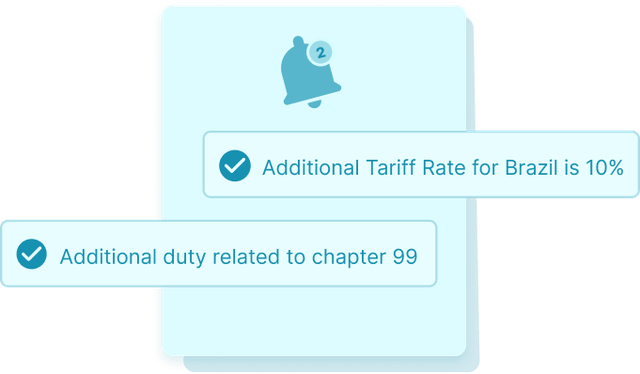
Import Requirements
Pillow
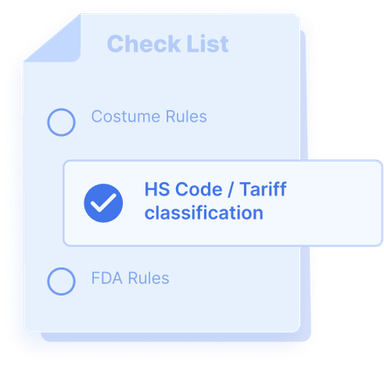
Import Data
Pillow


AI Insight
Plastic Bucket under HS Code 3924-24 shows growing demand in 12 emerging markets with favorable duty rates and limited competition. Our AI has identified key compliance requirements, optimal sourcing regions, and upcoming tariff changes that could impact your margins. See the complete analysis to discover specific opportunities.










Market
Opportunities
Top 5 Partners by Quantity
 United States
 Australia
 India
India Canada


Pillow HS Code description
Pillow harmonized system code
Product Overview A pillow classified under HTS 9404.90 is an article of bedding intended primarily to support the head and neck during rest, consisting of a filling enclosed within a textile casing. Key characteristics include typical commercial dimensions (standard ~50 × 66 cm; queen ~50 × 76 cm; king ~50 × 92 cm), loft/thickness commonly 5–20 cm, and gross unit mass approximately 0.2–1.5 kg depending on fill. Processing levels encountered in trade: sewn or gusseted construction, baffled or quilted chambers, down‑proof ticking, laminated covers, and finished treatments (anti‑microbial, hypoallergenic, flame‑retardant where specified). Measurable quality attributes used in specification sheets include cover thread count (200–800 tc), foam density for molded pillows (~30–90 kg/m3), and down fill‑power (approx. 400–900 cu in). Commercial subcategories under HTS 9404.90 are typically organized by fill material: down/feather, natural fibers (cotton/wool/kapok), man‑made fibers (polyester hollowfibre), molded polyurethane/memory foam, and cellular rubber/plastic pillows. Primary applications: hotel/contract bedding, retail household linens, healthcare/restorative care facilities, linen rental and industrial laundering services. HTS Code Classification & Trade Specifications Complete HTS structure: Chapter 94 — Furniture; bedding, mattresses, mattress supports, cushions and similar stuffed furnishings; Heading 9404 — Mattresses; articles of bedding and similar furnishings; Subheading 940490 — Other articles of bedding (commonly cited as HTS 940490 for pillows). Classification rationale: the article’s principal function as bedding (soft, head/neck support), its finished form (filled, enclosed or constituted of cellular rubber/plastic) and commercial use place it in heading 9404 rather than primary headings for raw textiles or plastics; specific classification can depend on dominant material and finished use. Trade considerations: common packaging is individual polybags with desiccant or vacuum‑compressed packing for memory foam, inner cartons and master cartons (typical carton counts 6–24 units; gross carton weight ~3–15 kg), palletization on ISO/Euro pallets for FCL shipments, and moisture protection for container stowage. Quality and compliance requirements include FTC fiber‑content and country‑of‑origin marking (19 CFR marking rules), test reports for Oeko‑Tex/ISO/ASTM textile and flammability parameters where applicable, and commercial invoices showing HTS 940490, unit quantity, net/gross weights and unit value to support customs duty calculation.
Pillow Chapter Note
1.- This Chapter does not cover : (a) Pneumatic or water mattresses, pillows or cushions, of Chapter 39, 40 or 63; (b) Mirrors designed for placing on the floor or ground (for example, cheval-glasses (swing-mirrors)) of heading 70.09; (c) Articles of Chapter 71; (d) Parts of general use as defined in Note 2 to Section XV, of base metal (Section XV), or similar goods of plastics (Chapter 39), or safes of heading 83.03; (e) Furniture specially designed as parts of refrigerating or freezing equipment of heading 84.18; furniture specially designed for sewing machines (heading 84.52); (f) Lamps or light sources and parts thereof of Chapter 85; (g) Furniture specially designed as parts of apparatus of heading 85.18 (heading 85.18), of headings 85.19 or 85.21 (heading 85.22) or of headings 85.25 to 85.28 (heading 85.29); (h) Articles of heading 87.14; (ij) Dentists' chairs incorporating dental appliances of heading 90.18 or dentists' spittoons (heading 90.18); (k) Articles of Chapter 91 (for example, clocks and clock cases); (l) Toy furniture or toy luminaires and lighting fittings (heading 95.03), billiard tables or other furniture specially constructed for games (heading 95.04), furniture for conjuring tricks or decorations (other than lighting strings) such as Chinese lanterns (heading 95.05); or (m) Monopods, bipods, tripods and similar articles (heading 96.20). 2.- The articles (other than parts) referred to in headings 94.01 to 94.03 are to be classified in those headings only if they are designed for placing on the floor or ground. The following are, however, to be classified in the above-mentioned headings even if they are designed to be hung, to be fixed to the wall or to stand one on the other : (a) Cupboards, bookcases, other shelved furniture (including single shelves presented with supports for fixing them to the wall) and unit furniture; (b) Seats and beds. 3.- (A) In headings 94.01 to 94.03 references to parts of goods do not include references to sheets or slabs (whether or not cut to shape but not combined with other parts) of glass (including mirrors), marble or other stone or of any other material referred to in Chapter 68 or 69. (B) Goods described in heading 94.04, presented separately, are not to be classified in heading 94.01, 94.02 or 94.03 as parts of goods.4.- For the purposes of heading 94.06, the expression “prefabricated buildings” means buildings which are finished in the factory or put up as elements, presented together, to be assembled on site, such as housing or worksite accommodation, offices, schools, shops, sheds, garages or similar buildings. Prefabricated buildings include "modular building units" of steel, normally presented in the size and shape of a standard shipping container, but substantially or completely pre-fitted internally. Such modular building units are normally designed to be assembled together to form permanent buildings.