

Quartz|HTS Code
Quartz belongs to HTS Subheading 2506.10, but the exact 8-digit Harmonized Tariff Schedule code depends on your product specifications. Select the correct code from this list based on your product details.
Quartz (other than natural sands); quartzite, whether or not roughly trimmed or merely cut, by sawing or otherwise, into blocks or slabs of a rectangular (including square) shape Quartz
-

DeepBeez

Founded in 2025
Tariff Tracker
Quartz
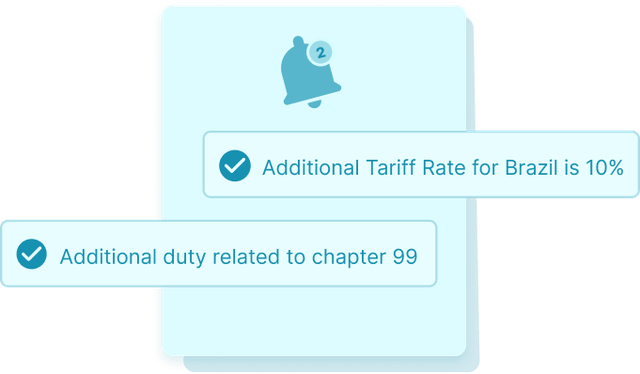
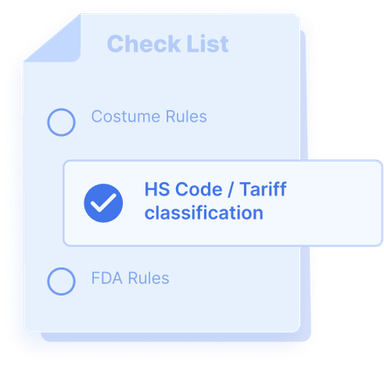
Import Requirements
Quartz
Import Data
Quartz


AI Insight
Plastic Bucket under HS Code 3924-24 shows growing demand in 12 emerging markets with favorable duty rates and limited competition. Our AI has identified key compliance requirements, optimal sourcing regions, and upcoming tariff changes that could impact your margins. See the complete analysis to discover specific opportunities.









Market
Opportunities
Top 5 Partners by Quantity
 United States
 Australia
 India
India Canada


Quartz HS Code description
Quartz harmonized system code
Product Overview Quartz (HTS 2506.10) is natural crystalline silica (SiO2) in forms other than natural sands—including lumps, crushed rock, coarse granules and engineered powders—used as a mineral feedstock and industrial raw material. Typical characteristics: alpha‑quartz crystal structure; Mohs hardness ≈7; bulk density ≈2.6–2.7 g/cm3; particle sizes from >2 mm lumps down to micron‑scale powders; moisture typically controlled to <1–2% for dried commercial grades. Chemical purity commonly ranges from ~95% SiO2 for crude quarried material to >99.5% SiO2 for high‑purity grades, with impurity metrics (Fe2O3, Al2O3, TiO2) reported in ppm–% as contractually specified. Processing levels include as‑mined, primary crushed, secondary ground, screened, washed, air‑classified and thermally treated grades. Subcategories within HTS 2506.10 relevant to trade are lump/quarry‑run, crushed/granular, coarse and fine ground (sieved or laser‑measured PSD), and high‑purity quartz derivatives. Commercial applications include glass and foundry feedstock, silicon metal precursor, filler/extender in polymers and coatings, refractories and industrial abrasives. Typical contract specifications include COA details for SiO2 %, PSD (µm), LOI and specific gravity. HTS Code Classification & Trade Specifications Complete 6‑digit HTS structure: 250610 — Chapter 25: “Salt; sulphur; earths and stone; plastering materials, lime and cement”; Heading 2506: “Quartz (other than natural sands); quartzite”; Subheading 2506.10: “Quartz (other than natural sands)”. Classification rationale: material is predominantly crystalline SiO2 and presented as lump, crushed or ground material (not classed as natural sand under 2505), and is traded as a mineral feedstock rather than processed silica sand, aligning it with 2506.10. For customs and duty calculation supply a commercial invoice, packing list, bill of lading, COA, SDS and certificate of origin; include measured attributes (SiO2 %, Fe2O3 ppm, PSD in µm, moisture %) on documentation. Common packaging: multi‑wall paper or polypropylene bags (25–50 kg), bulk totes or containerized bulk; preservation focuses on drying and moisture control and dust mitigation. Shipping notes: free‑flow stowage, dust control and occupational silica hazards (SDS/OSHA) are required; no hazardous transport classification typically applies. Quality verification uses XRD, XRF, laser PSD, sieve analysis and LOI per contractual and laboratory standards; HTS 250610 drives duty assessment and potential AD/CVD review.
Quartz Chapter Note
1.- Except where their context or Note 4 to this Chapter otherwise requires, the headings of this Chapter cover only products which are in the crude state or which have been washed (even with chemical substances eliminating the impurities without changing the structure of the product), crushed, ground, powdered, levigated, sifted, screened, concentrated by flotation, magnetic separation or other mechanical or physical processes (except crystallisation), but not products which have been roasted, calcined, obtained by mixing or subjected to processing beyond that mentioned in each heading. The products of this Chapter may contain an added anti-dusting agent, provided that such addition does not render the product particularly suitable for specific use rather than for general use. 2.- This Chapter does not cover : (a) Sublimed sulphur, precipitated sulphur or colloidal sulphur (heading 28.02); (b) Earth colours containing 70 % or more by weight of combined iron evaluated as Fe2O3 (heading 28.21); (c) Medicaments or other products of Chapter 30; (d) Perfumery, cosmetic or toilet preparations (Chapter 33); (e) Dolomite ramming mix (heading 38.16); (f) Setts, curbstones or flagstones (heading 68.01); mosaic cubes or the like (heading 68.02); roofing, facing or damp course slates (heading 68.03); (g) Precious or semi-precious stones (heading 71.02 or 71.03); (h) Cultured crystals (other than optical elements) weighing not less than 2.5 g each, of sodium chloride or of magnesium oxide, of heading 38.24; optical elements of sodium chloride or of magnesium oxide (heading 90.01); (ij) Billiard chalks (heading 95.04); or (k) Writing or drawing chalks or tailors' chalks (heading 96.09). 3.- Any products classifiable in heading 25.17 and any other heading of the Chapter are to be classified in heading 25.17. 4.- Heading 25.30 applies, inter alia, to : vermiculite, perlite and chlorites, unexpanded; earth colours, whether or not calcined or mixed together; natural micaceous iron oxides; meerschaum (whether or not in polished pieces); amber; agglomerated meerschaum and agglomerated amber, in plates, rods, sticks or similar forms, not worked after moulding; jet; strontianite (whether or not calcined), other than strontium oxide; broken pieces of pottery, brick or concrete.