


Semi precious stones|HTS Code
Semi precious stones belongs to HTS Subheading 7103.99, but the exact 8-digit Harmonized Tariff Schedule code depends on your product specifications. Select the correct code from this list based on your product details.
Precious stones (other than diamonds) and semiprecious stones, whether or not worked or graded but not strung, mounted or set; ungraded precious stones (other than diamonds) and semiprecious stones, temporarily strung for convenience of transport Otherwise worked Other than Rubies, sapphires and emeralds
Cut but not set, and suitable for use in the manufacture of jewelry
Other than Cut but not set, and suitable for use in the manufacture of jewelry

DeepBeez

Founded in 2025
Tariff Tracker
Semi precious stones
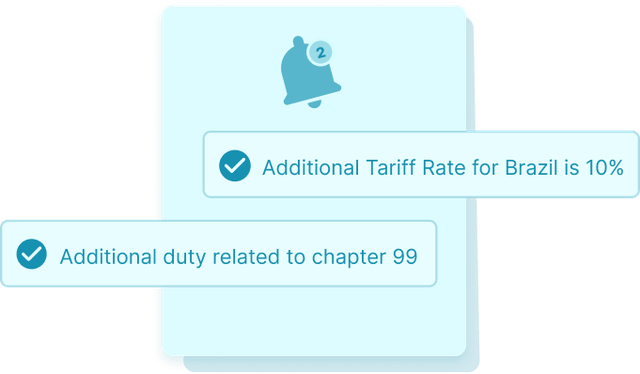
Import Requirements
Semi precious stones
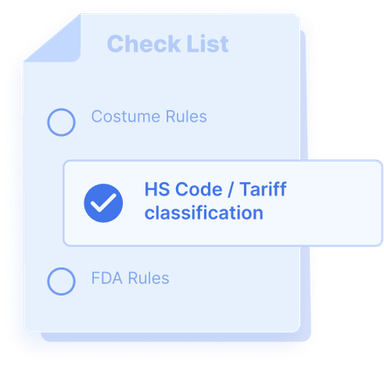
Import Data
Semi precious stones


AI Insight
Plastic Bucket under HS Code 3924-24 shows growing demand in 12 emerging markets with favorable duty rates and limited competition. Our AI has identified key compliance requirements, optimal sourcing regions, and upcoming tariff changes that could impact your margins. See the complete analysis to discover specific opportunities.









Market
Opportunities
Top 5 Partners by Quantity
 United States
 Australia
 India
India Canada


Semi precious stones HS Code description
Semi precious stones harmonized system code
Product Overview Semi-precious stones classified under HTS 7103.99 are natural mineral gemstones other than diamonds, whether or not worked or graded, typically presented as rough, sawn, or worked pieces for jewelry, ornamental and industrial uses. Key characteristics include measurable attributes recorded for trade: carat weight (0.01–500+ ct), calibrated dimensions (typical 2–40 mm with tolerances ±0.1–0.5 mm), Mohs hardness (commonly 5.0–8.5 depending on species), specific gravity (≈2.5–4.3), refractive index ranges by species, color saturation, transparency/translucency, and inclusion type/extent used in clarity grading. Processing levels range from unworked rough and sawn/trimmed blanks to lapidary-cut faceted stones, cabochons, calibrated beads/matched parcels, and powdered/crushed lapidary material. Quality attributes required for customs and trade documentation include cut quality, color grade, clarity grade, carat weight, and full disclosure of treatments (stabilization, dyeing, heating, impregnation). Common subcategories for 7103.99 in trade paperwork include unworked/semi-worked rough, cut but unset stones (faceted, cabochon), calibrated/matched sets, ornamental/collector specimens, and lapidary industrial material. Primary commercial applications are jewelry manufacture, retail loose-stone trade, inlay/watch components, and abrasive/pigment feedstock. HTS Code Classification & Trade Specifications Full 6-digit HTS structure: Chapter 71 (Natural or cultured pearls, precious or semi‑precious stones, precious metals), Heading 7103 (Precious stones other than diamonds; whether or not worked or graded), Subheading 7103.99 (6‑digit: 710399) used for other precious/semi‑precious stones not separately enumerated. Classification rationale: material is classified under 710399 when comprised of natural mineral gemstones (semi‑precious species) other than diamonds and when not mounted or strung; the worked state (rough, sawn, faceted, cabochon) is recorded for descriptive purposes but generally does not change the six‑digit placement unless a specific subheading applies. Trade considerations: include full technical descriptors on commercial invoices—species, carat weight and grams, calibrated dimensions in mm, treatment disclosure, gemological report numbers, gross/net weight, and country of origin—to support customs valuation and preference claims. Typical packaging practices are individual gem cartons or padded trays in sealed polybags, desiccant pouches for hygroscopic varieties, shock‑absorbent outer cartons, and ISPM‑15 compliant wood crates if used. Shipping and compliance requirements for high‑value consignments include insured/bonded transport, tamper‑evident seals, inclusion of HTS 710399 on shipping documents, adherence to recognized lab certification standards (GIA, AGL, SSEF) and mandatory treatment-disclosure protocols.
Semi precious stones Chapter Note
1.- Subject to Note 1 (A) to Section VI and except as provided below, all articles consisting wholly or partly : (a) Of natural or cultured pearls or of precious or semi-precious stones (natural, synthetic or reconstructed), or (b) Of precious metal or of metal clad with precious metal, are to be classified in this Chapter. 2.- (A) Headings 71.13, 71.14 and 71.15 do not cover articles in which precious metal or metal clad with precious metal is present as minor constituents only, such as minor fittings or minor ornamentation (for example, monograms, ferrules and rims), and paragraph (b) of the foregoing Note does not apply to such articles (). (B) Heading 71.16 does not cover articles containing precious metal or metal clad with precious metal (other than as minor constituents). 3.- This Chapter does not cover : (a) Amalgams of precious metal, or colloidal precious metal (heading 28.43); (b) Sterile surgical suture materials, dental fillings or other goods of Chapter 30; (c) Goods of Chapter 32 (for example, lustres); (d) Supported catalysts (heading 38.15); (e) Articles of heading 42.02 or 42.03 referred to in Note 3 (B) to Chapter 42; (f) Articles of heading 43.03 or 43.04; (g) Goods of Section XI (textiles and textile articles); (h) Footwear, headgear or other articles of Chapter 64 or 65; (ij) Umbrellas, walking-sticks or other articles of Chapter 66; (k) Abrasive goods of heading 68.04 or 68.05 or Chapter 82, containing dust or powder of precious or semi-precious stones (natural or synthetic); articles of Chapter 82 with a working part of precious or semi-precious stones (natural, synthetic or reconstructed); machinery, mechanical appliances or electrical goods, or parts thereof, of Section XVI. However, articles and parts thereof, wholly of precious or semi-precious stones (natural, synthetic or reconstructed) remain classified in this Chapter, except unmounted worked sapphires and diamonds for styli (heading 85.22); (l) Articles of Chapter 90, 91 or 92 (scientific instruments, clocks and watches, musical instruments); (m) Arms or parts thereof (Chapter 93); (n) Articles covered by Note 2 to Chapter 95; (o) Articles classified in Chapter 96 by virtue of Note 4 to that Chapter; or (p) Original sculptures or statuary (heading 97.03), collectors' pieces (heading 97.05) or antiques of an age exceeding one hundred years (heading 97.06), other than natural or cultured pearls or precious or semi-precious stones. 4.- (A) The expression “precious metal” means silver, gold and platinum. (B) The expression “platinum” means platinum, iridium, osmium, palladium, rhodium and ruthenium. (C) The expression “precious or semi-precious stones” does not include any of the substances specified in Note 2 (b) to Chapter 96. 5.- For the purposes of this Chapter, any alloy (including a sintered mixture and an inter-metallic compound) containing precious metal is to be treated as an alloy of precious metal if any one precious metal constitutes as much as 2 %, by weight, of the alloy. Alloys of precious metal are to be classified according to the following rules : (a) An alloy containing 2 % or more, by weight, of platinum is to be treated as an alloy of platinum; (b) An alloy containing 2 % or more, by weight, of gold but no platinum, or less than 2 %, by weight, of platinum, is to be treated as an alloy of gold; (c) Other alloys containing 2 % or more, by weight, of silver are to be treated as alloys of silver. 6.- Except where the context otherwise requires, any reference in the Nomenclature to precious metal or to any particular precious metal includes a reference to alloys treated as alloys of precious metal or of the particular metal in accordance with the rules in Note 5 above, but not to metal clad with precious metal or to base metal or non-metals plated with precious metal. 7.- Throughout the Nomenclature the expression “metal clad with precious metal” means material made with a base of metal upon one or more surfaces of which there is affixed by soldering, brazing, welding, hot-rolling or similar mechanical means a covering of precious metal. Except where the context otherwise requires, the expression also covers base metal inlaid with precious metal. 8.- Subject to Note 1 (A) to Section VI, goods answering to a description in heading 71.12 are to be classified in that heading and in no other heading of the Nomenclature. 9.- For the purposes of heading 71.13, the expression “articles of jewellery” means : (a) Any small objects of personal adornment (for example, rings, bracelets, necklaces, brooches, earrings, watch-chains, fobs, pendants, tie-pins, cuff-links, dress-studs, religious or other medals and insignia); and (b) Articles of personal use of a kind normally carried in the pocket, in the handbag or on the person (for example, cigar or cigarette cases, snuff boxes, cachou or pill boxes, powder boxes, chain purses or prayer beads). These articles may be combined or set, for example, with natural or cultured pearls, precious or semiprecious stones, synthetic or reconstructed precious or semi-precious stones, tortoise shell, mother-ofpearl, ivory, natural or reconstituted amber, jet or coral. 10.- For the purposes of heading 71.14, the expression “articles of goldsmiths' or silversmiths' wares” includes such articles as ornaments, tableware, toilet-ware, smokers' requisites and other articles of household, office or religious use. 11.- For the purposes of heading 71.17, the expression “imitation jewellery” means articles of jewellery within the meaning of paragraph (a) of Note 9 above (but not including buttons or other articles of heading 96.06, or dress-combs, hair-slides or the like, or hairpins, of heading 96.15), not incorporating natural or cultured pearls, precious or semi-precious stones (natural, synthetic or reconstructed) nor (except as plating or as minor constituents) precious metal or metal clad with precious metal.